

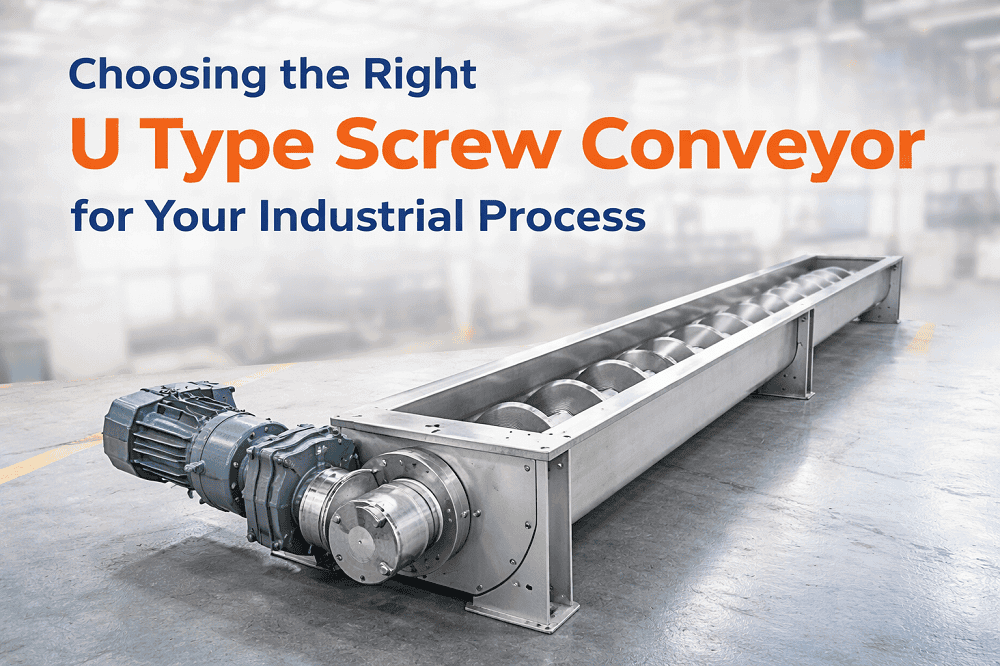
Material handling is a key part of many industries. Choosing the right equipment can improve efficiency and reduce costs. One popular solution is the U Type Screw Conveyor. It is widely used for moving bulk materials in a controlled way.
However, not all screw conveyors are the same. Selecting the wrong one can lead to breakdowns, product loss, or high maintenance costs. This guide will help you choose the right U Type Screw Conveyor for your industrial process.
What Is a U Type Screw Conveyor?
A U Type Screw Conveyor is a mechanical device used to move bulk materials horizontally or at a slight incline. It consists of a rotating screw blade, also called a flight, inside a U-shaped trough.
As the screw rotates, material moves forward along the trough. This design allows easy access for cleaning and maintenance. That is why it is commonly used in industries that handle powders, grains, or semi-solid materials.
Why Choose a U Type Screw Conveyor?
The U-shaped design offers several benefits.
- Easy inspection and cleaning
- Simple construction
- Cost-effective operation
- Suitable for many materials
- Flexible design options
These conveyors work well in both small and large facilities. They can be customized based on capacity, material type, and space limits.
Understand Your Material First
The first step in choosing the right U Type Screw Conveyor is understanding the material you need to move.
Material Characteristics to Consider
Ask these questions:
- Is the material dry or wet?
- Is it free-flowing or sticky?
- Is it abrasive or corrosive?
- Does it generate dust?
For example, cement powder needs a different design than food grains. Sticky materials may require special coatings or modified flights.
Knowing your material helps prevent clogging and wear.
Required Capacity and Throughput
Capacity is one of the most important factors. It refers to how much material the conveyor must move in a given time.
How to Estimate Capacity
Capacity depends on:
- Material bulk density
- Screw diameter
- Screw speed
- Trough loading percentage
Oversizing wastes energy. Undersizing causes overloads. A balanced design ensures smooth operation and long equipment life.
Conveyor Length and Layout
The length of the U Type Screw Conveyor affects performance. Longer conveyors may need intermediate bearings or higher power.
Layout Considerations
Think about:
- Horizontal distance
- Incline angle, if any
- Available floor space
- Inlet and discharge points
U Type Screw Conveyors work best in horizontal or near-horizontal setups. For steep inclines, other designs may perform better.
Selecting the Right Screw Design
The screw itself plays a major role in performance.
Common Screw Flight Types
- Standard flight – Best for dry, free-flowing materials
- Cut flight – Reduces material buildup
- Ribbon flight – Ideal for sticky or viscous materials
- Paddle flight – Used for mixing or agitation
Choosing the correct flight type ensures efficient material flow and reduces wear.
Trough Design and Covers
The trough holds the material and supports the screw.
Trough Options
- Plain U-shaped trough
- Flanged trough
- Dust-tight or sealed covers
If dust control is important, sealed covers are recommended. For food or chemical industries, hygiene and safety standards must be met.
Drive System and Power Requirements
The drive system powers the conveyor. It includes the motor, gearbox, and drive shaft.
Factors Affecting Power Needs
- Conveyor length
- Material weight
- Screw speed
- Incline angle
Selecting the right motor prevents overheating and energy waste. It also ensures stable operation during peak loads.
Material of Construction
The material used for the conveyor must match the application.
Common Construction Materials
- Carbon steel – Cost-effective for general use
- Stainless steel – Ideal for food, pharma, and corrosive materials
- Special alloys – Used for high wear or chemical exposure
The right material reduces corrosion and extends service life.
Maintenance and Cleaning Needs
Maintenance should be easy and safe.
The U-shaped trough allows quick access to internal parts. This is a major advantage over tubular conveyors.
Maintenance Tips
- Choose removable covers
- Ensure easy bearing access
- Use wear-resistant liners if needed
Lower maintenance means less downtime and lower costs.
Safety and Compliance
Safety is critical in any industrial process.
Key Safety Features
- Guards on rotating parts
- Emergency stop systems
- Dust control measures
Make sure the U Type Screw Conveyor complies with local safety and industry standards.
Industry-Specific Applications
U Type Screw Conveyors are used in many industries.
- Cement and construction
- Food processing
- Chemical plants
- Agriculture
- Waste management
Each industry has unique needs. Customization ensures the conveyor fits your process perfectly.
Working with the Right Manufacturer
Even the best design fails if manufacturing quality is poor.
Choose a supplier with:
- Proven industry experience
- Custom design support
- After-sales service
- Quality certifications
A reliable manufacturer helps you avoid costly mistakes.
Final Thoughts
Choosing the right U Type Screw Conveyor is not just about size or price. It is about matching the design to your material, process, and environment.
When selected correctly, a U Type Screw Conveyor offers reliable performance, low maintenance, and long service life. Take time to evaluate your needs and work with experienced professionals.
The right choice today will save time, money, and trouble in the future.