

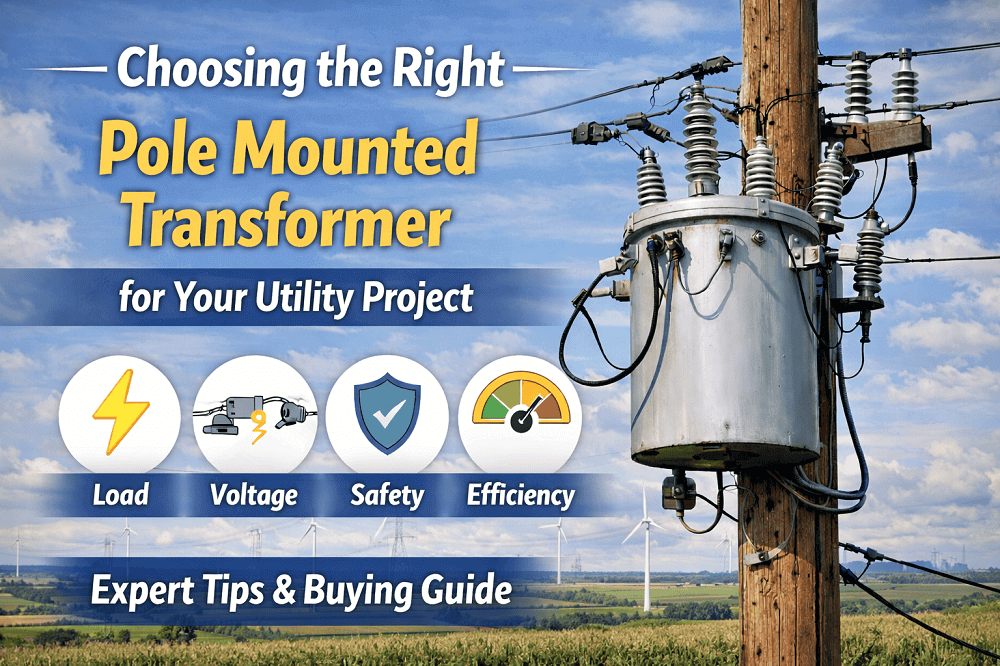
Electric power systems must be safe and reliable. One key part of any distribution network is the Pole Mounted Transformer. It reduces medium voltage from overhead lines to a lower level that homes and small buildings can use.
Choosing the right transformer is very important. A wrong choice can lead to power loss, safety risks, and high maintenance costs. A good choice improves system life and reduces downtime.
This guide will help you understand how to select the right Pole Mounted Transformer for your utility project. The information is simple and clear. It is useful for engineers, contractors, and utility planners.
What Is a Pole Mounted Transformer?
A Pole Mounted Transformer is a distribution transformer installed on an electric pole. It is commonly used in residential areas and rural regions.
Its main job is to step down voltage from distribution lines to usable levels. For example, it may reduce 11kV to 415V or 240V, depending on the system.
These transformers are compact. They are designed for outdoor use. They must handle weather, load changes, and voltage fluctuations.
Why Proper Selection Matters
Selecting the correct transformer is not just about voltage. Many factors must be considered.
If the transformer is too small, it may overload. This causes overheating and reduces lifespan. If it is too large, it increases cost and reduces efficiency.
Proper selection helps you:
- Improve energy efficiency
- Reduce maintenance costs
- Ensure stable voltage supply
- Extend equipment life
- Meet safety standards
Careful planning saves money in the long run.
Step 1: Determine the Load Requirement
The first step is to calculate the total load.
You need to know:
- Number of connected consumers
- Type of load (residential, commercial, or mixed)
- Expected peak demand
- Future load growth
Load is measured in kVA. Always allow extra capacity for future expansion. Many engineers add a safety margin of 20% to 30%.
For example, if your calculated load is 80 kVA, you may select a 100 kVA transformer.
Step 2: Select the Right Voltage Rating
Voltage rating is very important.
You must know:
- Primary voltage of the distribution line
- Required secondary voltage for consumers
Common primary voltages include 11kV and 33kV. Secondary voltage depends on local standards.
Make sure the transformer matches the local utility system. Wrong voltage rating can damage equipment and create safety risks.
Step 3: Choose Between Single-Phase and Three-Phase
Pole Mounted Transformers come in two main types.
Single-Phase Transformer
This type is used in small residential areas. It is simple and cost-effective. It is suitable for light loads.
Three-Phase Transformer
This type is used in commercial or industrial areas. It supports heavier loads and balanced power supply.
Choose based on your project size and load type.
Step 4: Check Cooling Method
Most Pole Mounted Transformers use oil cooling. They are oil-immersed transformers.
The insulating oil serves two purposes:
- Cooling internal parts
- Providing electrical insulation
Oil-immersed transformers are reliable and widely used. Make sure the oil quality meets required standards.
Some systems may require special cooling for hot climates. Check environmental conditions before final selection.
Step 5: Consider Environmental Conditions
Environmental factors affect performance.
Ask yourself:
- Is the area very hot?
- Is there heavy rainfall?
- Is the location near the sea?
- Is pollution high?
High temperature may reduce efficiency. Coastal areas may cause corrosion. Dust and pollution can damage insulation.
Choose a transformer with proper protection and coating for harsh conditions.
Step 6: Evaluate Efficiency and Losses
Transformers have two main types of losses:
- No-load losses
- Load losses
No-load losses occur even when the transformer is not supplying power. Load losses occur during operation.
Energy-efficient transformers reduce long-term operating cost. Check efficiency ratings before purchase.
Higher efficiency may cost more at first. But it saves money over time.
Step 7: Review Safety Features
Safety must never be ignored.
Important safety features include:
- Lightning arresters
- Overload protection
- Proper grounding
- Surge protection
Lightning is a common cause of transformer failure. Surge protection helps reduce damage.
Always follow local electrical safety codes.
Step 8: Check Compliance with Standards
Every country has electrical standards. The transformer must meet these standards.
Common standards may include:
- IEC standards
- ANSI standards
- Local utility guidelines
Compliance ensures safety and performance. It also avoids legal issues.
Ask the manufacturer for certification documents.
Step 9: Evaluate Manufacturer Reputation
Not all manufacturers offer the same quality.
Before choosing a supplier, check:
- Experience in transformer manufacturing
- Customer reviews
- Warranty terms
- After-sales support
- Availability of spare parts
Reliable manufacturers provide strong technical support. This is important for long-term projects.
Step 10: Compare Cost vs Value
Price is important. But it should not be the only factor.
A cheaper transformer may have:
- Lower efficiency
- Shorter lifespan
- Higher maintenance cost
Instead, focus on value. Compare quality, warranty, and service support.
Long-term savings matter more than initial price.
Common Mistakes to Avoid
Many utility projects face issues due to poor planning.
Avoid these common mistakes:
- Ignoring future load growth
- Selecting wrong voltage rating
- Skipping environmental checks
- Choosing based only on price
- Ignoring maintenance requirements
Careful analysis prevents these problems.
Maintenance Planning
Even the best Pole Mounted Transformer needs regular maintenance.
Plan for:
- Oil level inspection
- Insulation testing
- Visual inspection for leaks
- Checking connections
- Monitoring temperature
Regular maintenance increases reliability and reduces sudden failures.
Benefits of Choosing the Right Pole Mounted Transformer
When you select the right transformer, you gain many advantages.
- Stable voltage supply
- Lower energy loss
- Reduced repair cost
- Improved safety
- Longer equipment life
- Better customer satisfaction
A well-planned system builds trust and improves service quality.
Final Checklist Before Purchase
Before finalizing your decision, confirm the following:
- Correct kVA rating
- Proper voltage levels
- Suitable phase type
- Compliance with standards
- Weather protection features
- Manufacturer warranty
- Installation requirements
Review everything carefully. It helps avoid costly changes later.
Conclusion
Choosing the right Pole Mounted Transformer for your utility project requires careful planning. It is not just about selecting a device. It is about building a reliable power distribution system.
Start by calculating load requirements. Select proper voltage and phase type. Consider environmental conditions. Check efficiency and safety features. Always follow local standards.
A well-chosen transformer improves performance and reduces long-term costs. It also ensures safe and stable electricity for consumers.
Take time to evaluate all factors. A smart decision today will support your utility network for many years.