

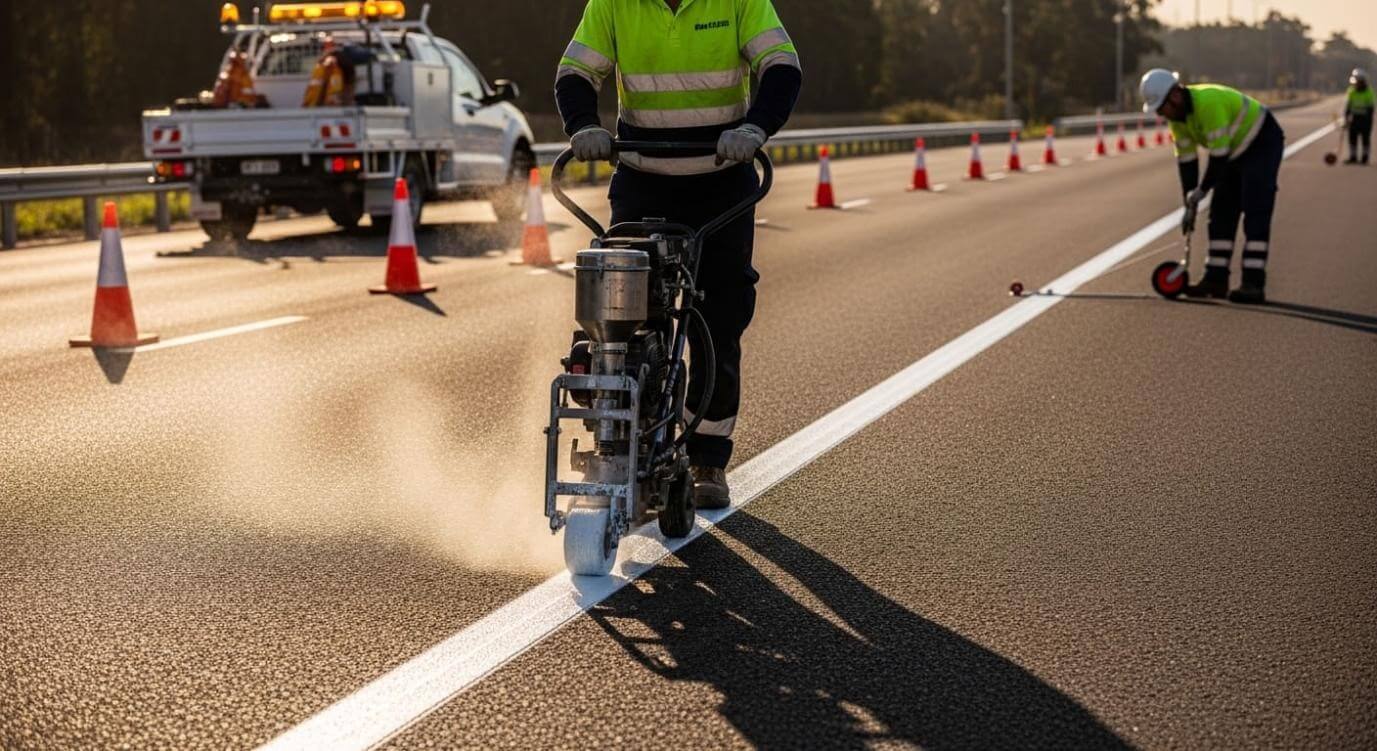
Modern real estate developments across Australia rely heavily on well-planned infrastructure. Roads, parking areas, pedestrian crossings, and shared access points must be clearly defined for safety and efficiency. One important element that supports these goals is Thermoplastic Line Marking.
In residential communities, commercial properties, industrial estates, and mixed-use developments, Thermoplastic Line Marking helps create organised spaces that guide vehicles and pedestrians safely. Clear line markings improve navigation, support property compliance requirements, and enhance the visual appeal of public and private spaces.
Understanding Thermoplastic Line Marking in Real Estate Infrastructure
Thermoplastic Line Marking refers to the application of heated plastic-based material onto roads, parking lots, pathways, and other surfaces. Once applied, the material cools quickly and forms a strong, durable layer that bonds firmly to asphalt or concrete surfaces.
Unlike traditional road paint, thermoplastic markings offer long-term performance. They resist fading, weather damage, and heavy vehicle traffic.
For real estate developments, thermoplastic markings help create:
- Clearly defined parking spaces
- Safe pedestrian crossings
- Traffic direction arrows
- Accessible parking zones
- Fire lane markings
- Bicycle lane indicators
- Loading and service areas
These markings help maintain order in both residential communities and commercial developments.
Why Thermoplastic Line Marking Matters in Australian Property Developments
Australia’s real estate market includes a wide range of developments, from suburban housing estates to busy retail complexes and industrial parks. Each type of property requires proper traffic management and safety systems.
Thermoplastic Line Marking supports these requirements by providing long-lasting visual guidance across property spaces.
Benefits for Real Estate Infrastructure
- Improves safety for residents, visitors, and drivers
- Helps property owners comply with Australian safety regulations
- Creates organised traffic flow within developments
- Enhances property value and visual appeal
- Reduces long-term maintenance costs
Because of these advantages, thermoplastic markings are widely used in modern infrastructure projects across Australia.
How Thermoplastic Line Marking Supports Public Infrastructure
- Enhancing Road Safety Within Property Developments
Many residential communities include internal roads, intersections, and shared driveways. Without proper markings, drivers may struggle to navigate these areas safely.
Thermoplastic Line Marking provides highly visible lane indicators, stop lines, and directional arrows that guide vehicles clearly. This helps reduce confusion and improves overall safety.
High-visibility markings also assist emergency vehicles in navigating properties quickly during urgent situations.
- Improving Parking Area Organisation
Parking areas are a key part of many real estate developments. Shopping centres, apartment complexes, office buildings, and hospitals all require organised parking systems.
Thermoplastic markings help define:
- Individual parking bays
- Disabled parking spaces
- Loading zones
- Motorcycle parking areas
- Emergency access lanes
Clear markings reduce parking conflicts and ensure efficient use of available space.
- Supporting Pedestrian Safety
Pedestrian movement is an important factor in real estate planning. Walkways, crossings, and shared traffic zones must be clearly identified to protect pedestrians.
Thermoplastic Line Marking creates bright and visible pedestrian crossings that alert drivers to slow down and give way. Reflective beads embedded in the markings increase visibility during nighttime or wet conditions.
This is particularly important for:
- School zones
- Residential communities
- Shopping centres
- Transport hubs
- Improving Traffic Flow in Large Developments
Large commercial and residential projects often have multiple access roads and traffic pathways. Clear guidance helps drivers move efficiently through these spaces.
Thermoplastic markings assist by indicating:
- Entry and exit lanes
- One-way traffic directions
- Turning points
- Speed control zones
These markings reduce congestion and improve the overall user experience within the property.
- Long-Term Durability for High-Traffic Areas
Real estate developments experience constant traffic from residents, visitors, service vehicles, and delivery trucks. Standard paint markings often fade quickly under these conditions.
Thermoplastic Line Marking offers superior durability because the material bonds strongly to the surface.
Advantages include:
- Resistance to heavy traffic wear
- Strong performance during extreme weather
- Long-lasting colour and visibility
- Reduced need for frequent repainting
This durability makes thermoplastic markings a cost-effective option for property managers and developers.
Australian Standards and Regulations for Line Marking
Real estate developments in Australia must follow strict safety and accessibility standards. Line marking plays a key role in meeting these requirements.
Common regulations include:
- Compliance with Australian road marking standards
- Clear identification of disabled parking spaces
- Proper pedestrian crossing markings
- Emergency vehicle access routes
- Fire lane identification
Using Thermoplastic Line Marking helps property owners maintain compliance while ensuring safe navigation across their developments.
Local councils may also provide specific requirements for parking layouts and traffic management within new developments.
Where Thermoplastic Line Marking Is Used in Real Estate Projects
Residential Communities
Modern housing estates use thermoplastic markings for internal roads, visitor parking areas, and pedestrian crossings.
Apartment Complexes
Large residential buildings require organised parking structures and clearly marked access routes for residents and emergency vehicles.
Commercial Properties
Shopping centres, office parks, and entertainment venues rely on clear line markings to guide customers and manage vehicle flow.
Industrial Developments
Warehouses and logistics centres use thermoplastic markings for loading bays, truck movement areas, and safety zones.
Public Infrastructure Near Developments
Roads surrounding new developments often include thermoplastic markings for pedestrian crossings, bus lanes, and cycling paths.
Maintenance and Longevity of Thermoplastic Markings
One of the main reasons property developers choose Thermoplastic Line Marking is its long lifespan.
However, proper maintenance helps maximise performance.
Maintenance Tips
- Regular inspections to identify worn markings
- Cleaning surfaces to maintain visibility
- Reapplying reflective beads if needed
- Touch-up work for high-traffic zones
With proper care, thermoplastic markings can remain effective for several years.
Questions and Answers: Common Questions About Thermoplastic Line Marking in Australia
What makes Thermoplastic Line Marking better than standard paint?
Thermoplastic markings last longer and remain more visible compared to standard paint. The material bonds strongly with the road surface, making it resistant to heavy traffic and harsh weather conditions.
Q: Where is Thermoplastic Line Marking commonly used in Australian real estate projects?
It is commonly used in apartment complexes, shopping centre parking lots, industrial estates, residential communities, and internal property roads.
Q: How long does Thermoplastic Line Marking typically last?
When applied correctly, thermoplastic markings can last several years depending on traffic levels and environmental conditions.
Q: Does Thermoplastic Line Marking meet Australian safety standards?
Yes, thermoplastic markings are widely used because they comply with Australian road safety and infrastructure regulations when installed correctly.
Q: Can Thermoplastic Line Marking be applied to existing surfaces?
Yes, the material can be applied to asphalt and concrete surfaces after proper preparation and cleaning.
Conclusion: Your Path to a Successful Thermoplastic Line Marking in Australia
Modern property developments depend on clear infrastructure planning to ensure safety, efficiency, and visual appeal. Thermoplastic Line Marking plays a major role in achieving these goals across residential, commercial, and industrial real estate projects in Australia.