

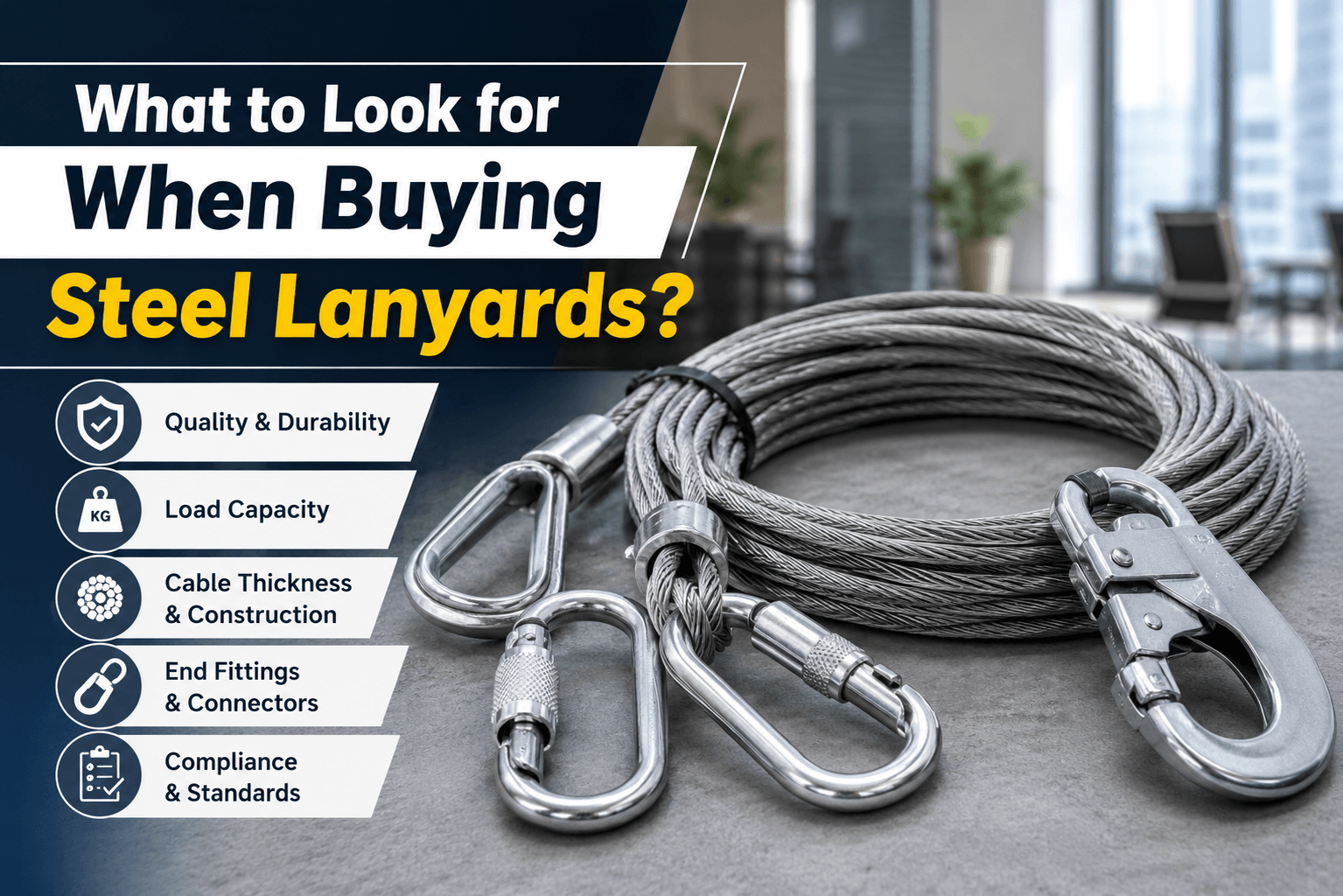
Ever wondered what really makes a quality steel lanyard? Are you confident that the safety equipment you’re using at work is up to scratch? And more importantly, do you know what features separate a reliable steel lanyard from one that might let you down when it matters most?
Choosing the right steel lanyard isn’t just about ticking a box on your safety checklist. It’s about protecting yourself and your colleagues from potentially life-threatening falls. Whether you’re working at heights on a construction site, maintaining telecommunications towers, or carrying out industrial maintenance tasks, your lanyard is quite literally your lifeline. Getting this decision wrong simply isn’t an option.
What Is a Steel Lanyard and How Does It Work?
Understanding Steel Lanyard Construction
A steel lanyard is a fall protection device made from braided or twisted steel wire rope, designed to connect a worker’s harness to an anchor point. The construction typically involves multiple strands of steel wire wound together to create a flexible yet incredibly strong cable. This design allows the lanyard to absorb some energy during a fall while maintaining its structural integrity.
Most steel lanyards feature a protective coating over the wire rope. This coating serves multiple purposes—it protects against corrosion, reduces wear on surrounding equipment, and makes the lanyard easier to handle. The end fittings, usually hooks or carabiners, are securely attached using swaged connections or mechanical terminations.
Common Applications for Steel Lanyards
Steel lanyards are particularly popular in environments where durability is paramount. You’ll commonly find them on construction sites, in mining operations, and across telecommunications infrastructure. They’re also favoured in situations where there’s exposure to sharp edges, heat, or abrasive materials that might damage textile alternatives. Their robust nature makes them ideal for heavy-duty industrial applications where reliability is non-negotiable.
.jpg)
Key Features to Consider When Buying Steel Lanyards
Load Capacity and Weight Ratings
The load capacity of your steel lanyard is arguably the most critical specification to check. In Australia, fall arrest lanyards must typically support a minimum breaking strength of 15 kN. However, you’ll want to factor in the combined weight of the worker, their tools, and any equipment they’re carrying. Always choose a lanyard rated well above your actual requirements—this provides an essential safety margin.
Cable Diameter and Length Options
Cable diameter directly affects both strength and flexibility. Thicker cables offer higher breaking strengths but can be stiffer and heavier. Common diameters range from 4mm to 6mm for most industrial applications. Length is equally important—too short limits your movement, while too long increases fall distance. Standard lengths typically range from 1 to 2 metres, though custom options are available.
Coating and Corrosion Resistance
Given Australia’s varied climate conditions, corrosion resistance shouldn’t be overlooked. Look for lanyards with galvanised wire rope or those featuring protective PVC or nylon coatings. These coatings shield the steel from moisture, chemicals, and UV exposure. For coastal or marine environments, stainless steel options provide superior protection against salt-induced corrosion.
Connector Types and End Fittings
The connectors on your lanyard need to match your existing equipment. Common options include scaffold hooks, snap hooks, and karabiners. Check that fittings are self-locking and rated for fall arrest use. Double-action or triple-action gates provide added security by requiring deliberate actions to open, reducing the risk of accidental disconnection.
Are Steel Lanyards Better Than Wire Rope Lanyards?
Here’s where terminology can get a bit confusing. Steel lanyards and wire rope lanyards are essentially the same thing—both refer to lanyards constructed from braided steel wire. The terms are often used interchangeably within the industry.
When comparing steel lanyards to textile alternatives like webbing or rope lanyards, each has distinct advantages. Steel lanyards excel in durability and resistance to cutting, abrasion, and heat. They’re the go-to choice when working around sharp edges or in harsh industrial environments.
On the other hand, textile lanyards are lighter, more flexible, and often more comfortable for extended wear. They’re also easier to inspect visually for damage. Your choice should ultimately depend on your specific work environment and the hazards you’re likely to encounter. In many cases, having both options available allows you to select the most appropriate lanyard for each task.
Safety Standards and Compliance in Australia
Understanding Australian Safety Regulations
In Australia, fall protection equipment must comply with strict standards set by Safe Work Australia and enforced through state-based work health and safety legislation. The primary standard governing lanyards is AS/NZS 1891.1, which covers industrial fall-arrest systems and devices.
This standard specifies requirements for design, testing, and performance. All lanyards used for fall arrest must be capable of limiting arrest forces to 6 kN or less, protecting the worker from injury during a fall. Employers have a legal obligation to provide compliant equipment and ensure workers are properly trained in its use.
Certifications to Look For
When purchasing steel lanyards, always verify they carry appropriate certifications. Look for compliance markings indicating AS/NZS 1891.1 certification. Additionally, check that connectors meet AS/NZS 1891.4 requirements for fall-arrest harness assemblies.
Reputable manufacturers will provide documentation including test certificates and declarations of conformity. Don’t hesitate to ask suppliers for this paperwork—any legitimate supplier should readily provide it.
How Do You Choose the Right Lanyard for Your Needs?
Assessing Your Work Environment
Start by evaluating the conditions you’ll be working in. Consider factors like temperature extremes, exposure to chemicals or solvents, presence of sharp edges, and potential for abrasion. Steel lanyards are ideal for environments where durability is paramount, but they may not be the best choice for every situation.
Think about the anchor points available at your worksite and whether your lanyard connectors will be compatible. Also consider fall clearance—the distance between your anchor point and any lower level. You’ll need sufficient clearance to account for lanyard length, harness stretch, and your own height.
Matching Lanyards to Specific Tasks
Different tasks demand different configurations. For work requiring frequent repositioning, a shorter lanyard with a positioning function might be appropriate. For tasks involving significant fall hazards, a shock-absorbing lanyard becomes essential.
Some situations may call for twin-leg lanyards, allowing continuous connection while moving between anchor points. Take time to match your equipment to your specific work requirements rather than opting for a one-size-fits-all approach.
How Long Do Steel Lanyards Last?
Factors Affecting Lifespan
The lifespan of a steel lanyard depends on several factors, including frequency of use, working conditions, and maintenance practices. While steel lanyards don’t have a mandated expiry date under Australian standards, manufacturers typically recommend replacement after 5 to 10 years, even without visible damage.
Exposure to harsh chemicals, extreme temperatures, or heavy abrasion will accelerate wear. Lanyards subjected to a fall arrest event must be immediately removed from service and professionally inspected or replaced.
Signs It’s Time to Replace Your Steel Lanyard
Keep an eye out for warning signs including broken wire strands, kinking, corrosion, distorted fittings, or damaged coatings. Any lanyard showing these issues should be retired immediately. Trust your instincts—if something looks wrong, it probably is.
.jpg)
Steel Lanyard Maintenance: What You Need to Know
Inspection Best Practices
Regular inspections are essential. Before each use, conduct a visual and tactile examination. Run the cable through your gloved hands, feeling for broken wires or irregularities. Check fittings for proper operation and signs of wear.
Formal inspections by a competent person should occur at least every six months, with thorough documentation maintained. Create an inspection schedule and stick to it religiously.
Proper Storage and Care
Store lanyards in a clean, dry location away from direct sunlight, chemicals, and sharp objects. Hang them properly to avoid kinking. Clean with mild soap and water when necessary, ensuring they’re completely dry before storage.
What Is the Difference Between a Lanyard and a Lifeline?
While both are fall protection devices, they serve different purposes. A lanyard is a relatively short connector—typically under 2 metres—that attaches a harness to an anchor point. A lifeline, conversely, is a longer horizontal or vertical line that allows workers to move along a working area while remaining connected.
Lifelines may be permanent installations or temporary setups, and workers connect to them using lanyards. Think of the lifeline as the highway and the lanyard as your personal connection to it.
Common Mistakes to Avoid When Purchasing Steel Lanyards
Don’t sacrifice quality for price—cheap equipment may cost you dearly in the long run. Avoid purchasing uncertified products or those without clear compliance documentation. Never assume one lanyard suits all applications, and resist the temptation to skip proper training.
Also, don’t forget to factor in the complete system. Your lanyard must work seamlessly with your harness, connectors, and anchor points. Mismatched equipment can compromise the entire fall protection system.
Where to Buy Quality Steel Lanyards in Australia?
Purchase from reputable suppliers specialising in height safety equipment. Major industrial safety suppliers across Australia carry comprehensive ranges. Look for suppliers offering technical support, training services, and after-sales assistance. Online purchasing is convenient, but verify the supplier’s credentials and ensure products meet Australian standards.
Making the Right Investment in Safety
Choosing the right steel lanyard involves balancing multiple factors—load capacity, environmental conditions, compliance requirements, and practical usability. It’s not simply about grabbing the first option you see; it’s about making an informed decision that protects lives.
Throughout this guide, we’ve covered the essentials: understanding construction, evaluating key features, navigating Australian safety standards, and maintaining your equipment properly. Armed with this knowledge, you’re well-prepared to make a smart purchase that serves you reliably for years to come.