

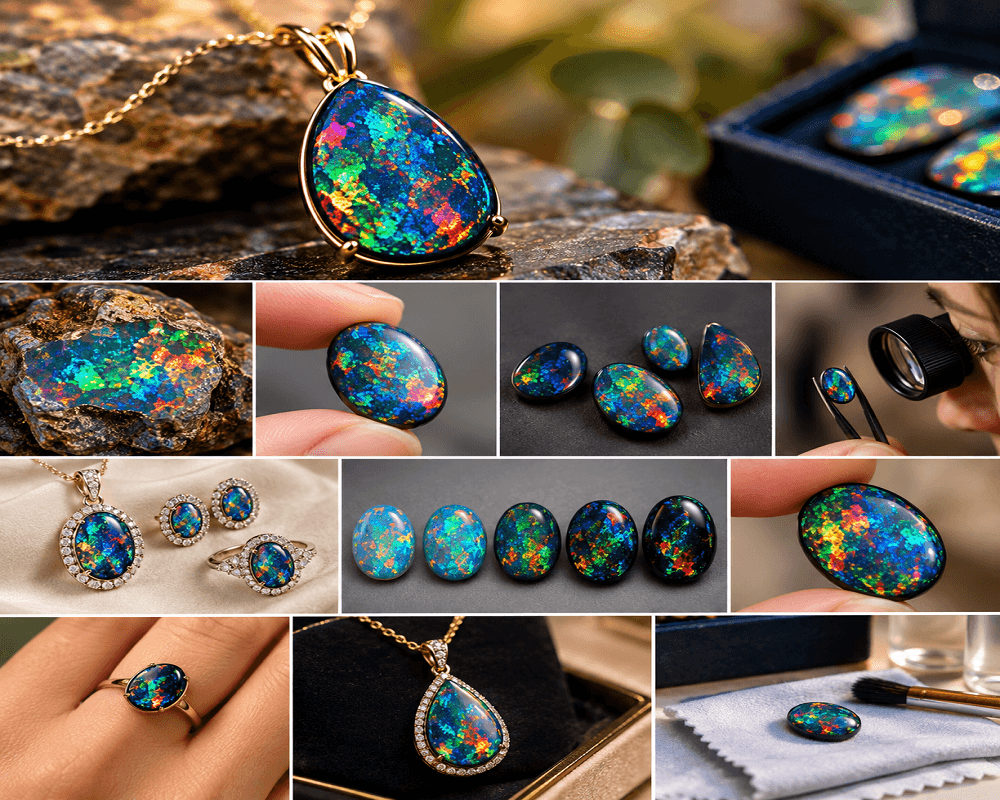
Have you ever gazed into a black opal and felt completely mesmerised by its dancing colours? Perhaps you’re wondering what makes these Australian gems so incredibly sought-after by collectors worldwide? Or maybe you’re ready to invest in one but feel overwhelmed by all the factors to consider?
Lightning Ridge black opals are genuinely special. These stunning gemstones hail from a remote corner of outback New South Wales, where miners have been unearthing treasures for over a century. Unlike any other opal variety, black opals display their fiery play of colour against a dark background, creating an intensity that simply can’t be matched. They’re Australia’s most prized gemstones, and for good reason.
In this guide, we’ll walk you through everything you need to know about selecting the perfect Lightning Ridge black opal. From understanding what makes these gems valuable to spotting fakes and finding trusted dealers, you’ll finish reading with the confidence to make an informed purchase. Whether you’re buying your first opal or adding to an existing collection, this information will prove invaluable.
What Makes Lightning Ridge Black Opals So Special?
The Unique Geology Behind These Rare Gems
Lightning Ridge sits atop ancient seabeds that dried up millions of years ago. The region’s unique geological conditions created the perfect environment for opal formation. Silica-rich water seeped through sandstone, depositing tiny spheres that eventually became opal. What makes Lightning Ridge different is the presence of iron oxides and carbon in the rock, which create that distinctive dark body tone.
These geological conditions exist nowhere else on Earth in quite the same way. The opals form in thin seams and “nobbies” (rounded nodules) that miners must carefully extract from the surrounding rock. Each piece is essentially a geological miracle, taking millions of years to develop its stunning optical properties.
Why Is Lightning Ridge Considered the Black Opal Capital of the World?
Simply put, Lightning Ridge produces roughly 95% of the world’s black opals. No other location comes close. The town itself has a population of just a few thousand, yet it attracts opal enthusiasts from every corner of the globe. The mines have been producing since 1901, and despite over a century of extraction, new discoveries still occur regularly.
Understanding Black Opal Quality: The Essential Factors
Body Tone: What Does “Black” Really Mean?
Here’s something that surprises many buyers: black opals aren’t actually black. The term refers to the body tone behind the play of colour. This background ranges from dark grey to deep blue-black. Gemologists use a scale from N1 (darkest) to N9 (lightest), with N1-N4 classified as black opal. The darker the body tone, the more dramatically the colours pop.
The Play of Colour: Patterns, Brightness, and Fire
The play of colour is where black opals truly shine. This optical phenomenon occurs when light diffracts through the silica spheres within the stone. The best specimens display bright, vivid colours that dance and shift as you move the stone. Red is generally considered most valuable, followed by orange, green, and blue.
How Do You Judge the Quality of a Black Opal?
When assessing quality, consider these key factors: body tone darkness, brightness of colour play, colour range (more colours typically mean higher value), and pattern type. A top-quality stone will have an N1-N2 body tone with brilliant, rolling colour that covers the entire face of the gem.
Clarity and Transparency: What to Look For
Unlike diamonds, opals aren’t expected to be perfectly clear. However, you’ll want to avoid stones with visible inclusions, cracks, or “potch” (colourless opal) showing through the face. The surface should be smooth and well-polished, with colour visible from all angles.
Black Opal Colour Patterns Explained
Harlequin, Pinfire, Broad Flash, and Rolling Flash
Different pattern types command different prices. Harlequin features distinct, angular patches of colour resembling a checkerboard—it’s incredibly rare. Pinfire displays tiny dots of colour across the surface. Broad flash shows large, sweeping areas of single colours. Rolling flash creates waves of colour that move across the stone as you tilt it.
Which Colour Pattern Is Most Valuable?
True harlequin pattern is the holy grail for collectors. A genuine harlequin black opal can fetch astronomical prices at auction. However, rolling flash and broad flash patterns with exceptional brightness can be equally stunning and represent excellent value for most buyers.
What Is the Rarest Colour in Black Opal?
Red is the rarest and most valuable colour in black opal. A stone displaying bright red against an N1 body tone is the pinnacle of opal collecting. Red occurs when the silica spheres are largest, which happens less frequently during formation.
How Much Should You Expect to Pay for a Lightning Ridge Black Opal?
Understanding Price Per Carat
Black opal prices vary enormously. Entry-level stones might cost $50-200 per carat, while museum-quality specimens can exceed $15,000 per carat. The famous “Aurora Australis” sold for over $1 million. Most quality pieces suitable for jewellery fall between $500-3,000 per carat.
Are Black Opals a Good Investment?
High-quality black opals have historically appreciated well. Unlike diamonds, which are carefully controlled by mining companies, black opal supply is genuinely limited. As Lightning Ridge mines become less productive, top specimens continue gaining value. That said, buy what you love rather than purely for investment.
Budget-Friendly Options Without Compromising Quality
Consider smaller carat weights with excellent colour play. A brilliant half-carat stone often looks more impressive than a dull two-carat piece. Semi-black opals (N5-N6 body tones) offer remarkable beauty at lower prices. Crystal black opals, which are more transparent, can also provide exceptional value.
Natural vs Treated vs Synthetic: How to Spot the Difference
What Is a Doublet or Triplet Opal?
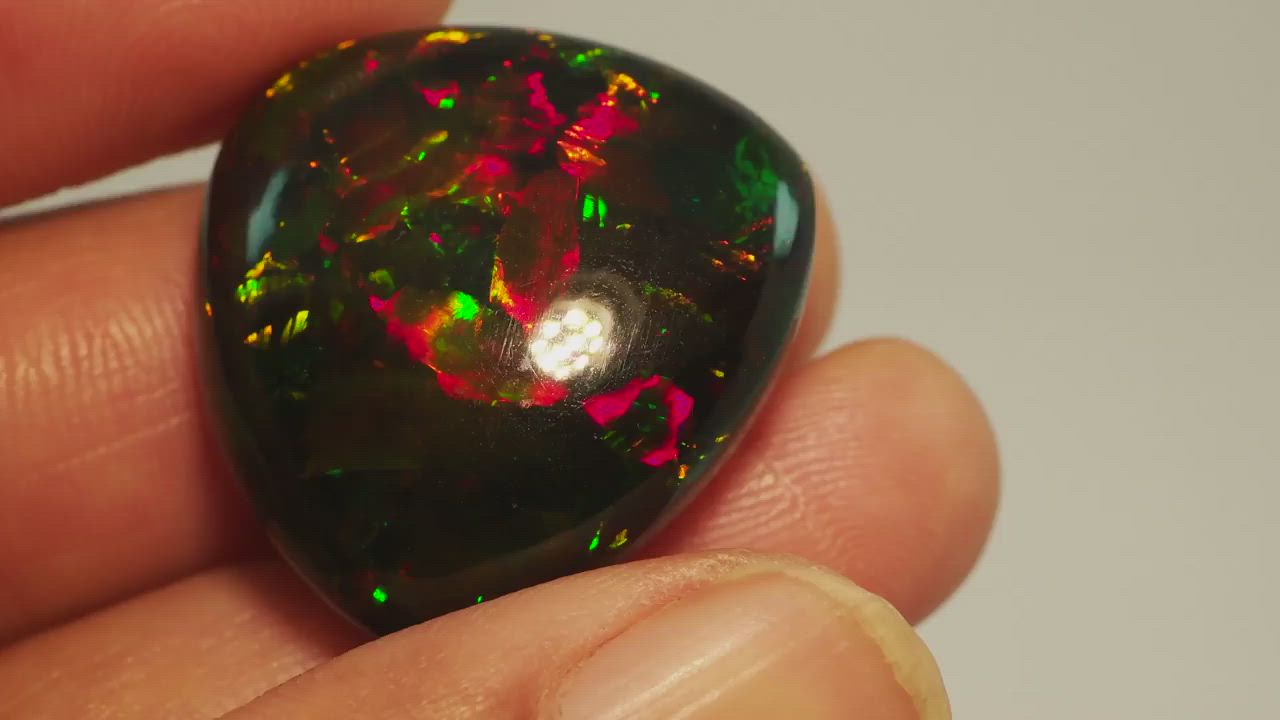
Doublets consist of a thin slice of natural opal glued to a dark backing material. Triplets add a clear quartz cap on top. These aren’t fake—they’re composite stones that make opal more affordable and durable. They should always be clearly labelled and priced accordingly.
How Can You Tell If a Black Opal Is Real?
Examine the stone’s side profile. Solid opals have natural potch backing, while doublets show a distinct line where materials join. Under magnification, natural opals display organic, irregular patterns. Lab-created opals often appear too perfect, with suspiciously uniform colour distribution.
Where to Buy Authentic Lightning Ridge Black Opals in Australia
Trusted Dealers and What to Ask Before Purchasing
Visit Lightning Ridge itself for the widest selection and best prices. Reputable dealers include members of the Australian Opal Association. Always ask about origin, treatment history, and whether certification is available. A trustworthy dealer welcomes questions and provides detailed information without pressure.
Buying Online vs In-Person: Pros and Cons
Buying in person lets you assess colour play in different lighting conditions—something photos simply can’t capture. However, established online dealers with good return policies can offer excellent value. Check reviews, confirm return windows, and ensure they provide videos showing colour movement.
Choosing Your Lightning Ridge Treasure
Selecting the perfect Lightning Ridge black opal is both an art and a science. You’ve now got the knowledge to assess body tone, evaluate colour play, understand pattern types, and spot potential problems. This information puts you miles ahead of most buyers walking into an opal shop for the first time.
Remember that beyond all the technical factors, the best opal is simply one that speaks to you. These gems are deeply personal—each one captures light in its own unique way. Trust your instincts when a particular stone catches your eye. If it makes your heart skip, that’s the one.
Whether you’re hunting for an engagement ring centrepiece or a loose stone for your collection, take your time and enjoy the process. Visit multiple dealers, compare stones in natural daylight, and don’t rush into a purchase you’re not completely comfortable with. The perfect Lightning Ridge black opal is out there waiting for you—happy hunting!