
Commercial Building Maintenance is the backbone of any office, retail, or industrial space in Australia — From the high‑rise towers in the CBD to the suburban warehouses in Mount Waverley, the quality of your maintenance program determines tenant satisfaction, safety, and long‑term asset value. In my experience, facilities managers who treat Commercial Building Maintenance as a strategic function stay ahead of costly breakdowns & regulatory headaches — If you’re wondering whether your current approach meets today’s expectations, keep reading – we’ll break it down step by step.
Why Modern Standards Matter for Commercial Building Maintenance
Modern standards aren’t just paperwork; they reflect the climate realities of Melbourne, the rise of smart building tech, and tightening Australian regulations. In my experience, a dated Commercial Building Maintenance routine can leave you exposed to water ingress after a sudden summer thunderstorm or to fire safety gaps that a regulator will flag on inspection. The thing is, a proactive stance saves you from emergency calls that disrupt business operations.
- Heat‑wave resilience – check roof insulation and HVAC efficiency.
- Bush‑fire preparedness – maintain clear vegetation zones and fire‑rated doors.
- Regulatory compliance – align with AS 1851 & AS 3666.
- Tenant expectations – deliver clean, safe, and comfortable spaces.
What typically happens is that building owners who ignore modern standards end up with higher insurance premiums and frequent service interruptions. From what I’ve seen in the inner‑west suburbs regular audits & updates to your Commercial Building Maintenance plan keep the building running smoothly year‑round.
Core Components of a Proactive Commercial Building Maintenance Plan
A solid Commercial Building Maintenance plan covers four pillars: structural health, mechanical systems, safety equipment, and sustainability. In my experience, each pillar needs a dedicated schedule, clear responsibilities, and a reporting framework that lets you track progress in real time. The thing is, when you separate these tasks, you can spot trends before they become failures.
- Structural – roof, façade, gutters, and downpipes.
- Mechanical – HVAC servicing, pump checks, and elevator inspections.
- Safety – fire safety audits emergency lighting and signage.
- Sustainability – solar PV cleaning, rainwater tank maintenance, and energy audits.
From what I’ve seen, integrating a digital logbook into your Commercial Building Maintenance workflow makes it easier to assign work, capture photos, and generate compliance reports for the local council or a property manager in Mount Waverley.
Seasonal and Climate‑Responsive Strategies for Melbourne and Mount Waverley
Melbourne’s weather swings from hot, dry summers to wet, windy winters, and that variability drives specific maintenance needs — In my experience, aligning your Commercial Building Maintenance calendar with seasonal risks prevents the most common issues like blocked gutters, roof leaks, and HVAC overloads. The thing is, a one‑size‑fits‑all schedule simply won’t cut it in a climate‑shift era.
- Summer – inspect and clean air‑conditioning filters check solar panel output.
- Autumn – clear leaf‑filled gutters, test fire‑rated doors.
- Winter – inspect roof insulation, verify heating system performance.
- Spring – conduct pest inspections, clean exterior façades.
What typically happens is that property managers who follow this seasonal checklist see a 30% reduction in emergency repair calls. From what I’ve seen, the proactive approach also aligns with Green Star and NABERS sustainability goals.
Digital Tools & Predictive Analytics in Commercial Building Maintenance
Predictive analytics are reshaping Commercial Building Maintenance across Australia. In my experience linking Building Management Systems (BMS) with IoT sensors lets you spot a rise in humidity before a roof leak becomes a costly repair. The thing is the data you collect can feed a digital twin of the building giving you a visual model to simulate wear and plan interventions.
- IoT sensors – temperature, vibration, & water leak detectors.
- Digital twin – 3‑D model that updates with real‑time sensor data.
- Analytics dashboard – alerts for thresholds and trend analysis.
- Mobile app – technicians receive tasks, capture photos, & sign off on the spot.
From what I’ve seen, facilities that adopt these tools reduce unplanned downtime by up to 40% and keep their Commercial Building Maintenance records audit‑ready for AS 1851 and AS 3666 inspections.
Certifications, Licences and Compliance in Australia
Compliance isn’t optional; it’s a legal requirement that protects occupants and the building owner. In my experience, the most relevant certifications for Commercial Building Maintenance in Melbourne include AS 1851 (fire safety maintenance), AS 3666 (ventilation), and the Green Star rating for sustainability. The thing is, having a certified contractor with a valid licence makes the audit process smoother.
- AS 1851 – annual fire safety maintenance & testing.
- AS 3666 – ventilation system cleaning & inspection.
- Green Star – environmental performance certification.
- NABERS – energy and water efficiency rating.
- Licensed electricians and plumbers – required for any wiring or piping work.
What typically happens is that a building with up‑to‑date certifications passes council inspections without delay, keeping tenants happy and avoiding fines. From what I’ve seen, many property managers in Mount Waverley keep a compliance folder on the cloud for quick access.
Case Study – A Mid‑Size Office in Mount Waverley Saves Time & Downtime
ABC Technologies occupies a four‑storey office block on High Street, Mount Waverley, and their previous Commercial Building Maintenance routine was reactive: they called a plumber only after a burst pipe, and fire safety checks were done sporadically. In my experience, the building began experiencing repeated HVAC failures during the summer heatwave, leading to tenant complaints.
We introduced a proactive Commercial Building Maintenance programme that included quarterly HVAC servicing, monthly gutter and downpipe inspections, and a digital audit schedule connected to a cloud‑based dashboard. The team also installed IoT water‑leak sensors in the basement and integrated them with the building’s BMS. Within six months, the building recorded zero unplanned HVAC shutdowns, the gutters stayed clear during the winter storms, and the fire safety audit passed with no deficiencies. The property manager reported a smoother relationship with tenants and a clear path toward Green Star certification.
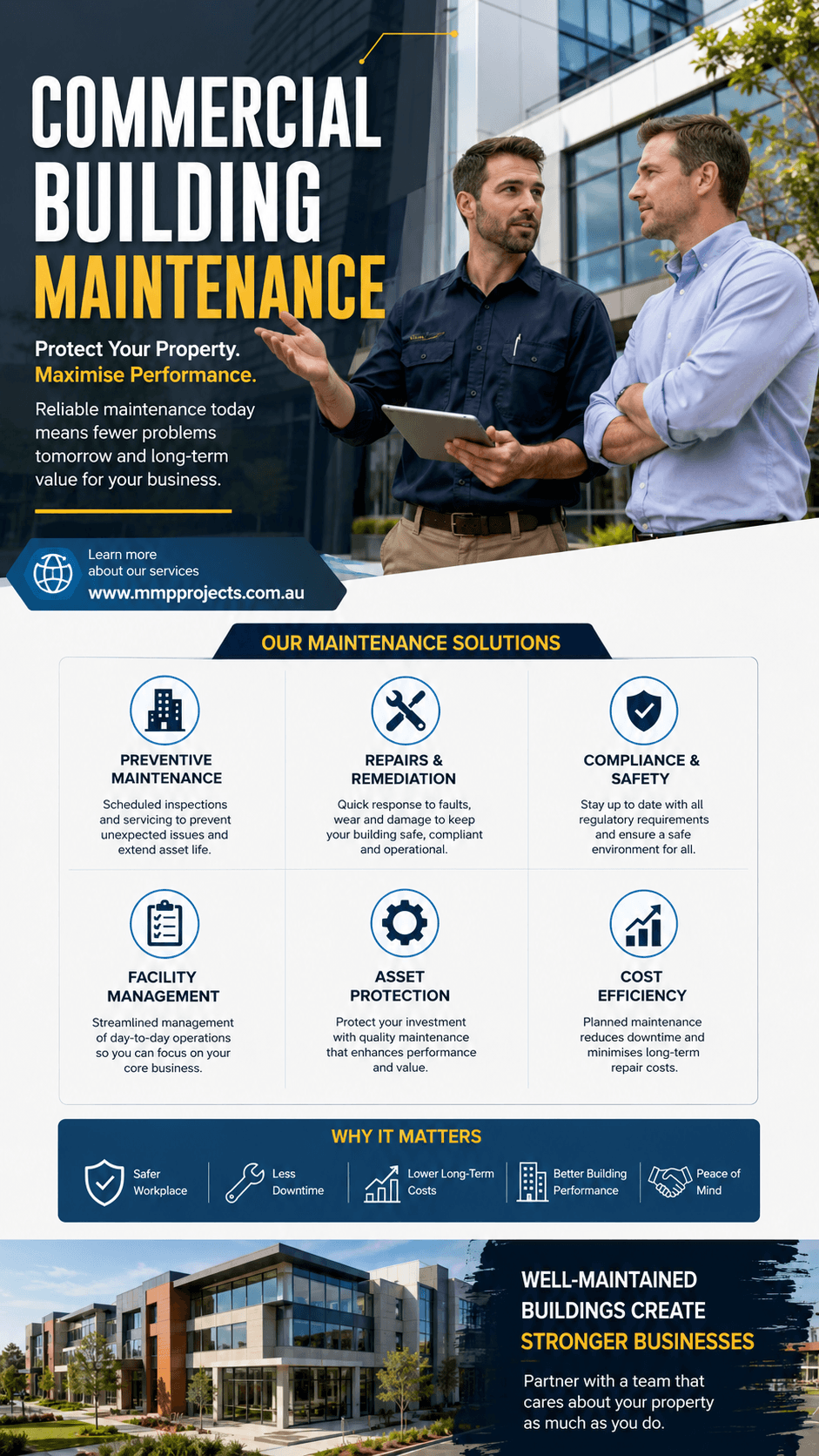
Comparison of Maintenance Approaches
| Approach | Key Features | Typical Outcome |
| Reactive | Fix‑when‑broken, ad‑hoc inspections, no schedule. | Higher downtime, unpredictable costs, compliance risk. |
| Preventive | Scheduled inspections, routine servicing, compliance checklists. | Reduced emergencies predictable budgeting better asset life. |
| Predictive | IoT sensors digital twin analytics alerts integrated BMS. | Minimized downtime, data‑driven decisions, sustainability gains. |
Frequently Asked Questions
Q: What is the difference between preventive and predictive Commercial Building Maintenance?
Preventive Maintenance follows a set schedule – think monthly HVAC filters or quarterly fire safety checks. Predictive Maintenance uses sensor data and analytics to forecast failures before they happen, allowing you to intervene only when needed.
Q: How often should gutters be cleaned in Mount Waverley?
From what I’ve seen, a minimum of twice a year – after the summer storms & before the winter rains – keeps downpipes clear and avoids costly water damage.
Q: Do I need a licensed contractor for all Commercial Building Maintenance tasks?
Make sure any electrical, gas, or plumbing work is done by a licensed professional — You know? This is a legal requirement and also ensures work meets as 1851 & as 3666 standards.
Q: Can digital tools really reduce my building’s maintenance costs?
Yes. Predictive analytics pinpoint exactly when a component needs attention, cutting out unnecessary service calls and extending equipment life.
Q: What certifications should I look for when hiring a Commercial Building Maintenance provider?
Look for AS 1851 fire safety accreditation, AS 3666 ventilation compliance, and any Green Star or NABERS experience if sustainability is a priority.