
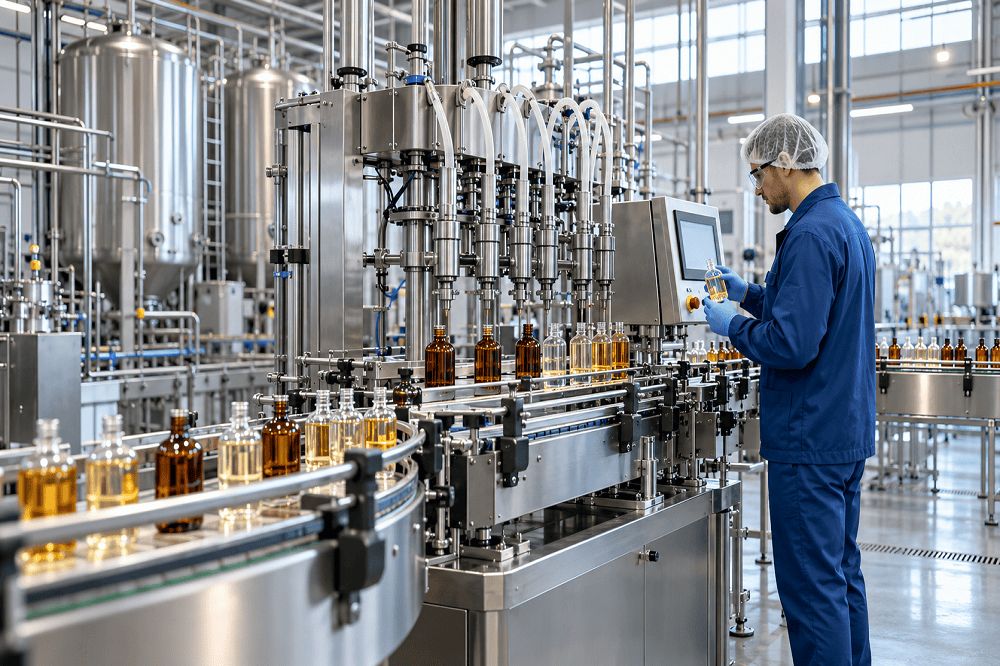
Buying a liquid filling machine is an important decision for any manufacturer. The right machine can improve filling consistency and production speed. It can also reduce product waste and manual work.
However, one filling machine cannot handle every liquid equally well. A machine designed for water may not be suitable for honey, cream, sauce, or foaming detergent.
Container size, production volume, hygiene, and accuracy also affect the decision. Manufacturers must study the complete application before comparing machines.
This Liquid Filling Machine Buying Guide for Manufacturers explains the main selection factors. It will help you compare machines and ask suppliers the right questions.
Why Choosing the Right Liquid Filling Machine Matters
A filling machine is a major part of a packaging line. If it operates too slowly, other machines may have to wait.
If the machine is inaccurate, the company may put too much or too little product into containers. Overfilling increases product costs. Underfilling may create compliance and customer satisfaction problems.
The wrong machine can also cause:
- Product spills
- Excessive foam
- Dripping nozzles
- Inconsistent fill levels
- Frequent stoppages
- Long cleaning times
- Container damage
The most expensive or fastest machine is not always the best choice. The machine should match the product, container, output, and factory conditions.
1. Understand the Liquid You Need to Fill
Start by studying the product. Its physical and chemical properties will help determine the right filling technology.
Check the Product Viscosity
Viscosity describes how easily a liquid flows. Water has low viscosity and flows quickly. Honey, shampoo, cream, and thick sauce move more slowly.
Thin products may work well with gravity or timed-flow filling. Thick products often need a piston or positive-displacement pump.
Do not check viscosity at room temperature only. Some liquids become thinner when heated. Others become thicker during storage.
Tell the machine supplier the product’s viscosity at its actual filling temperature.
Consider Foaming Behaviour
Products such as liquid soap, shampoo, and detergent may create foam during filling. High filling speeds can make this problem worse.
A suitable machine may use adjustable flow speed. It may also offer bottom-up filling.
During bottom-up filling, the nozzle starts near the base of the container. It rises as the product level increases. This reduces the distance the liquid falls and can help control foam.
Check for Solid Particles
Some liquids contain pulp, seeds, herbs, fruit pieces, or other particles. Small nozzles and standard valves may become blocked.
Tell the supplier the approximate size and type of the particles. The machine may require:
- Larger product paths
- Wider nozzles
- Special valves
- A suitable pump
- Gentle product handling
Small and soft particles are usually easier to handle than large or irregular pieces.
Confirm the Filling Temperature
Some products are filled while hot. Others must remain within a controlled temperature range.
Temperature can change the viscosity and flow of a liquid. This can affect filling speed and accuracy.
Hot products may require heated tanks, insulated pipes, and heat-resistant seals. The machine should also protect operators from hot surfaces.
Review Chemical Properties
Acids, solvents, cleaners, and other chemicals may damage unsuitable machine parts.
Product-contact metals, hoses, seals, and gaskets must resist the liquid. Manufacturers should provide a safety data sheet when dealing with industrial chemicals.
2. Compare Common Filling Technologies
Different machines use different methods to measure and dispense liquid.
Gravity Filling Machines
A gravity filler stores liquid above the filling nozzles. The product flows into the container when a valve opens.
Gravity filling is commonly used for thin and free-flowing liquids. The machines are often simple to operate and maintain.
However, gravity filling may not suit very thick products. Changes in viscosity or product pressure may also affect performance.
Piston Filling Machines
A piston filler draws product into a cylinder. The piston then pushes a measured amount through the filling nozzle.
Piston filling machines can handle many medium and high-viscosity products. Common examples include:
- Sauces
- Creams
- Lotions
- Pastes
- Syrups
- Shampoo
The valves and nozzles must be correctly selected when the product contains particles.
Pump Filling Machines
Pump fillers use a powered pump to move the liquid. Common pump types include gear, lobe, diaphragm, and peristaltic pumps.
The correct pump depends on the product’s viscosity and chemical properties. It also depends on the required fill volume and cleaning process.
Pump fillers can offer useful flexibility. However, all pump parts must be compatible with the product.
Overflow Filling Machines
Overflow fillers fill every container to a similar visible level. Extra product returns to the supply tank after reaching the target level.
This method is useful for clear bottles where shelf appearance matters.
However, an equal fill height does not always mean an equal volume. Small differences in the internal shape of each bottle can affect the actual quantity.
Flow-Meter Filling Machines
A flow meter measures the amount of liquid moving through the product line. The control system closes the valve when the target amount is reached.
Flow-meter filling allows operators to adjust the fill quantity electronically. The selected meter must suit the product and operating conditions.
Net-Weight Filling Machines
A net-weight filler measures the product by weight. Each container sits on a load cell during filling.
This method may suit large containers and products sold by weight. It can also help control the amount of valuable liquid placed in each container.
Load-cell filling systems are used for products such as sauces and dressings where clean, controlled filling is important.
3. Check Your Containers and Fill Sizes
The machine must suit every container you plan to use. Give the supplier samples of each bottle, jar, can, pouch, drum, or jerrycan.
Record the following details:
- Minimum and maximum fill volume
- Container height and width
- Neck opening size
- Container material
- Container shape
- Container stability
- Required fill level
- Cap or closure type
Light plastic bottles may bend or fall during handling. Narrow-neck containers may need smaller nozzles and slower filling.
Ask how long it takes to change from one container size to another. Confirm whether special change parts will be required.
4. Calculate the Required Production Output
Machine speed may be stated in bottles per minute or containers per hour. Do not select a machine based only on its maximum advertised speed.
Actual output depends on several factors:
- Fill volume
- Liquid viscosity
- Number of nozzles
- Container size
- Filling method
- Operator efficiency
- Conveyor speed
- Required accuracy
A thick product usually takes longer to fill than water. Large containers also require more filling time.
Calculate output from your daily production target. Include time for cleaning, breaks, maintenance, product changes, and unexpected stops.
The filler should also match the speed of the capper, labelling machine, conveyor, and inspection system.
5. Choose the Right Automation Level
Manual and semi-automatic filling machines can suit small batches. They usually need less investment and floor space.
However, these machines require more operator involvement. Production speed may also depend on the operator.
Fully automatic systems are suitable for higher production volumes. They can position, fill, and release containers with limited manual work.
The automation level should match actual demand. A high-speed automatic machine may not be economical when batches are small and product changes are frequent.
Consider:
- Daily production volume
- Labour availability
- Available floor space
- Operator skills
- Number of product changes
- Future production plans
Ask whether the machine can accept extra filling heads if production increases.
6. Confirm Filling Accuracy Carefully
Do not accept a general statement such as “high filling accuracy.” Ask the supplier to explain how the figure was calculated.
Confirm whether the tolerance is based on volume or weight. Ask which product, container, and fill size were used during testing.
Filling accuracy may change because of:
- Product viscosity
- Product temperature
- Foam
- Supply pressure
- Fill volume
- Container shape
- Machine speed
Ask the supplier to test your actual product and containers. Agree on the target fill and acceptable tolerance before ordering the machine.
7. Review Product-Contact Materials and Hygiene
Every machine part that touches the liquid must suit the product. This includes tanks, pumps, pipes, valves, nozzles, hoses, seals, and gaskets.
Stainless steel is commonly used, but different grades are available. A stainless-steel frame does not prove that every product-contact part is suitable.
Request a written list of product-contact materials. Confirm that the hoses and seals can handle both the product and cleaning chemicals.
Food, beverage, cosmetic, and pharmaceutical manufacturers may need a hygienic design. Useful features may include:
- Smooth product-contact surfaces
- Easy drainage
- Limited dead spaces
- Accessible machine parts
- Closed product paths
- Clean-in-place options
Hygiene level, filling method, output, temperature, and foam control are all important when selecting a filling system.
8. Check the Filling Nozzle Design
The nozzle has a direct effect on filling quality. An unsuitable nozzle may cause dripping, splashing, foam, or product strings.
Ask whether the nozzle has an anti-drip shut-off. Thick products may need a special cut-off system.
The nozzle diameter must fit inside the container opening. It must also allow particles to pass without blocking the flow.
For foaming products, ask whether bottom-up filling is available. During a test, inspect the bottle neck and conveyor after each filling cycle.
9. Evaluate Cleaning and Changeover Time
Frequent product changes can reduce available production time. The machine should be easy to clean, inspect, and set up again.
Ask the supplier:
- Which parts require manual removal?
- Are tools needed for cleaning?
- How much product remains inside the system?
- How long does cleaning take?
- Can the product path drain fully?
- Are stored product recipes available?
- How long does a container changeover take?
Some machines offer clean-in-place systems. These circulate cleaning liquid through the product path without complete disassembly.
The cleaning method must still meet the needs of the product and industry.
10. Review Safety and Line Integration
The machine should have suitable guards, emergency stops, and electrical protection.
Hot, pressurised, corrosive, or flammable liquids may need additional safety measures.
Check the machine’s:
- Electrical supply
- Compressed-air requirement
- Floor space
- Working height
- Conveyor direction
- Access for maintenance
- Drainage needs
- Ventilation requirements
If the filler will join an existing line, provide the supplier with conveyor height and speed details. Confirm how the machine will communicate with other packaging equipment.
11. Plan for Future Growth
Your production needs may change after installation. New products may have different viscosities, fill sizes, or containers.
Ask whether the machine can support:
- Additional filling heads
- New container sizes
- Different pumps
- Alternative nozzles
- Stored product settings
- Conveyor extensions
- New capping equipment
- Higher future output
A flexible machine may cost more initially. However, it may reduce the need for early replacement.
12. Calculate the Total Cost of Ownership
The purchase price is only one part of the total cost. Compare the expected cost over the full working life of the machine.
Include:
- Freight and packaging
- Installation
- Commissioning
- Operator training
- Power use
- Compressed-air use
- Water and cleaning chemicals
- Change parts
- Preventive maintenance
- Spare parts
- Product waste
- Production downtime
A cheaper machine may become expensive if parts are difficult to obtain. Long cleaning times and frequent breakdowns can also increase production costs.
13. Test the Machine Before Purchase
A product trial can reduce buying risk. Send the supplier enough liquid and several sample containers.
The trial should use the planned fill volume and normal production conditions.
Check:
- Filling accuracy
- Production speed
- Foam formation
- Nozzle dripping
- Product spills
- Container stability
- Product damage
- Cleaning time
- Product remaining in the system
Record the test results. Include the agreed conditions and acceptance standards in the purchase document.
Conclusion
Choosing the right liquid filling machine requires more than comparing price and speed.
Start with the product, container, fill size, and production target. Then compare filling technologies, accuracy, hygiene, cleaning, safety, and supplier support.
Ask for clear technical information. Test the machine with your product whenever possible.
A careful buying process can prevent filling problems and unexpected costs. It can also create a safer, cleaner, and more efficient packaging line.