

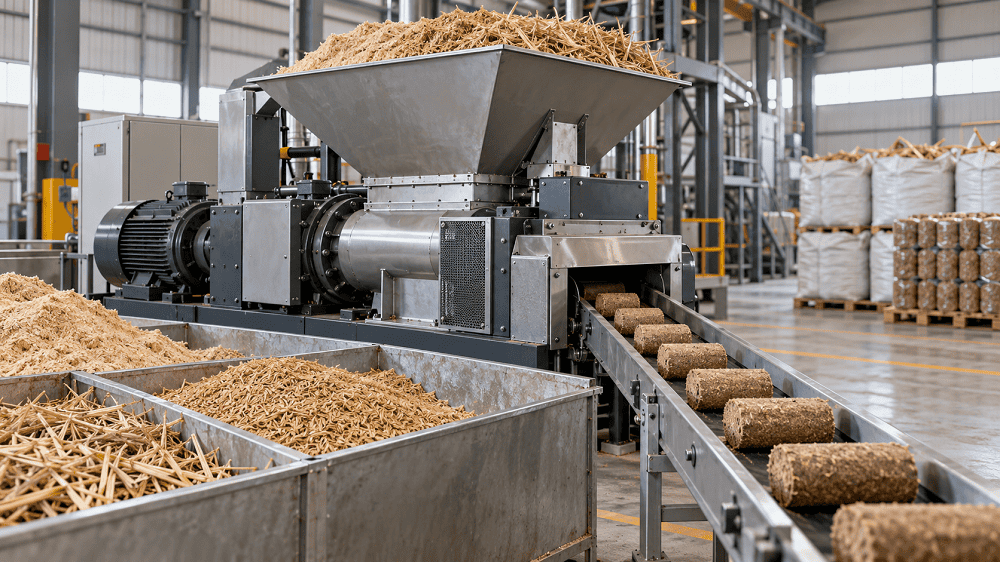
Agriculture, forestry, and manufacturing create large amounts of leftover material. This waste can include sawdust, rice husk, crop stalks, dry leaves, and wood offcuts. When businesses do not manage these materials well, they can take up valuable space and become difficult to handle.
A Briquetting Machine can turn certain types of loose, dry waste into compact blocks called briquettes. These blocks are easier to store, move, and handle. Some briquettes can also be used as fuel in suitable boilers, furnaces, or heating systems.
Briquetting is one way to reuse selected waste. It does not process every kind of rubbish. The material must be suitable for the machine and for its intended use. Careful sorting, preparation, and safe handling are essential.
What Is a Briquetting Machine?
A Briquetting Machine compresses prepared material under pressure. This turns loose waste into solid blocks or pieces. The shape and size of the briquettes depend on the machine and its settings.
The waste usually needs preparation before it enters the machine. Operators may need to sort, dry, crush, or grind the material. Some materials also need a binder to help the briquettes hold their shape. Other materials can bind together through pressure and heat.
The process can help businesses make better use of waste that would otherwise be difficult to store or transport. However, results vary by material. A business should test its feedstock before choosing a machine or planning a large production process.
Which Waste Materials Can Be Used?
A Briquetting Machine can process some types of dry biomass and industrial residue. Common examples include:
- Sawdust and wood shavings
- Crop stalks and straw
- Rice husk and other agricultural residues
- Dry leaves and grass
- Selected wood-processing waste
The material’s condition matters as much as its type. Moisture, particle size, and contamination can affect the production process and the quality of the briquettes.
Not all waste is suitable. Wet food waste, mixed household rubbish, plastics, metals, stones, and materials that contain chemicals may need separate treatment. Waste intended for fuel must be carefully checked. Paint, glue, coatings, and other unwanted substances can create hazards when burned.
How Does the Briquetting Process Work?
Briquetting usually involves several steps. These steps help prepare the waste and produce briquettes that are easier to handle.
1. Collect and sort the waste
First, workers collect waste from farms, mills, factories, or workshops. They sort it to remove unwanted materials. Keeping different waste types separate can make it easier to check whether each material is suitable.
2. Prepare the material
The selected waste may need to be chopped, crushed, or ground. This helps create a more even feedstock for the machine. If the material has too much moisture, it may need to be dried. Preparation needs depend on the material and machine.
3. Compress the feedstock
The prepared material is fed into the Briquetting Machine. The machine applies pressure and forms the material into compact briquettes. Some systems use a binder, while others rely on pressure and heat to hold the material together.
4. Cool and store the briquettes
After production, briquettes may need time to cool or dry. They should be stored in a clean, dry place. Proper storage helps protect them from moisture and damage.
How Briquetting Supports Waste Management
It makes loose waste easier to handle
Loose biomass can be bulky and difficult to stack. Briquettes are more compact and uniform. This can make loading, storage, and transportation easier. A business may also find it simpler to keep track of waste after it has been processed into a standard form.
The amount of space saved depends on the material and production method. Businesses should test their own waste instead of assuming that all materials will compress in the same way.
It creates a use for selected waste
Some clean biomass residues can be turned into briquettes for suitable fuel applications. This gives businesses another option for managing certain waste streams. It can also reduce the amount of usable material sent for disposal.
The briquettes must match the needs of the equipment that will use them. Their size, moisture, and composition can affect performance. They should only be used in systems designed to handle that type of fuel.
It can support local processing
When waste is produced near a processing facility, it may be possible to make briquettes close to the source. This can create work in collection, sorting, preparation, production, and distribution.
A local project still needs a reliable supply of suitable waste. It also needs a clear plan for storing the briquettes and finding users for them. Without these plans, production may not solve the original waste management problem.
What Should Businesses Consider Before Choosing a Machine?
Before investing in a Briquetting Machine, a business should review its waste and production needs. Useful questions include:
- What types of waste are available?
- How much material is produced each day or month?
- Is the supply steady throughout the year?
- How much moisture does the material contain?
- Does it need to be sorted, crushed, or dried?
- Who will use the finished briquettes?
- What size and quality do those users require?
- How will the briquettes be stored and transported?
A small test can help answer many of these questions. Testing the actual material can show whether it forms stable briquettes and whether the output suits its planned use. It can also help identify extra steps, such as drying or grinding.
Businesses should consider the entire process, not only the press. Collection, preparation, energy use, labour, maintenance, storage, and transportation can all affect the project.
Safety and Environmental Considerations
A Briquetting Machine changes the shape of waste. It does not remove harmful chemicals or make contaminated waste safe. Operators must check the feedstock and remove unsuitable materials before processing.
Machinery should be used by trained workers. Staff may need protective equipment when handling dust, heat, or moving parts. The production area should be kept clean and organised. Finished briquettes also need safe storage, especially where there is a risk of moisture or fire.
Burning biomass can create smoke and air pollution. Briquettes should only be used in suitable equipment and under proper operating conditions. Businesses should follow local requirements and consider the effects of fuel use on workers and nearby communities.
Conclusion
A Briquetting Machine can help manage selected types of dry waste by turning loose material into compact briquettes. These briquettes can be easier to store, transport, and handle. Some may also be used as fuel in suitable systems.
The process works best when businesses choose the right feedstock and prepare it properly. They should test their waste, plan for safe operation, and confirm that there is a practical use for the finished briquettes. With careful planning, briquetting can become a useful part of a wider waste reduction and reuse strategy.