

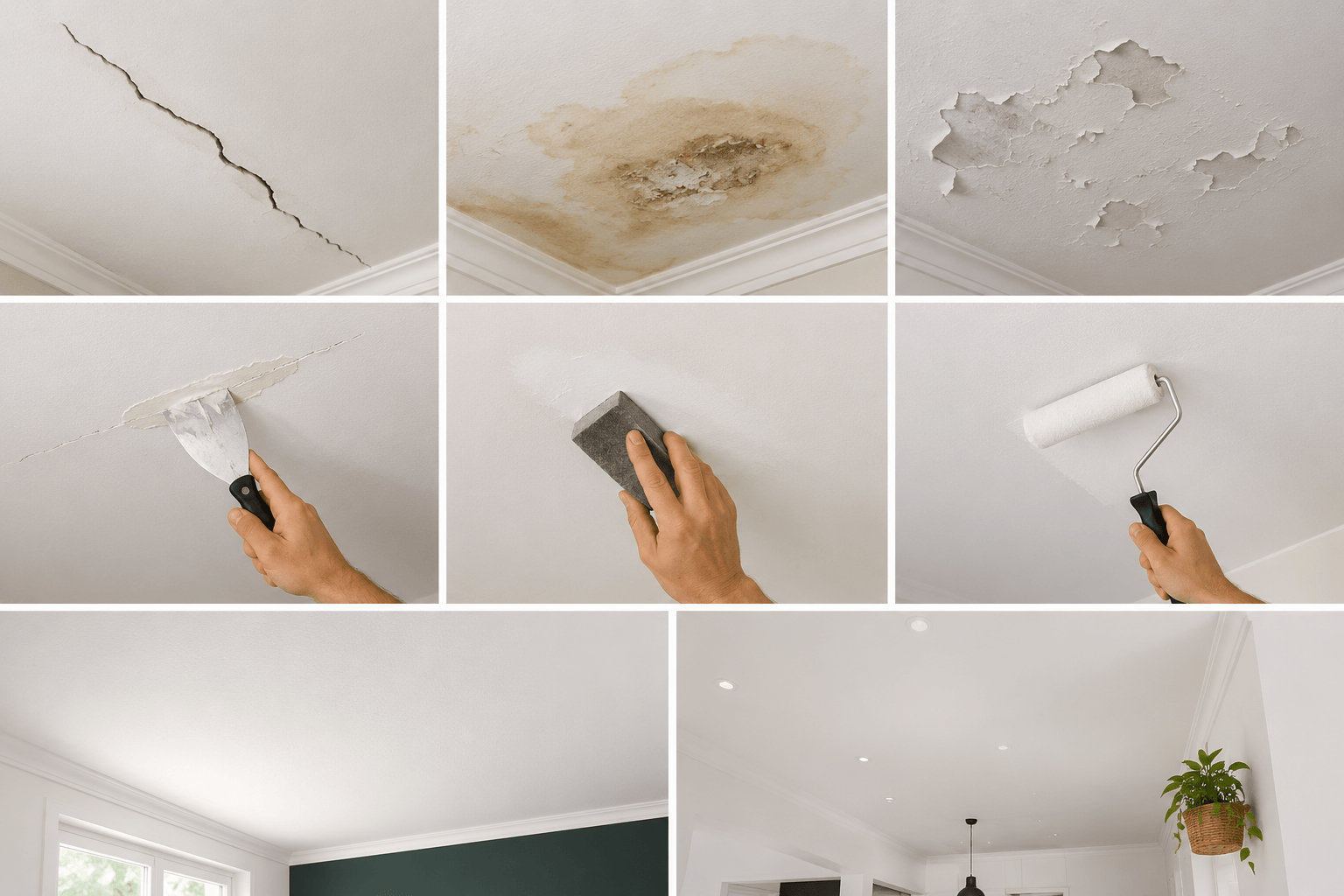
Have you ever looked up and noticed an unsightly crack creeping across your ceiling? Perhaps you’ve spotted a mysterious brown stain that definitely wasn’t there last month? Or maybe you’ve noticed your ceiling seems to be sagging in one corner, and you’re wondering whether to panic or simply ignore it?
You’re certainly not alone. Ceiling damage is one of those household issues that many Australians tend to put on the back burner. After all, it’s not like a leaky tap that drips annoyingly in the middle of the night. But here’s the thing – ignoring ceiling problems can lead to much bigger headaches down the track. What starts as a hairline crack can eventually become a structural concern. A small water stain might indicate a hidden leak that’s causing mould to flourish behind the scenes.
In this guide, we’ll walk you through everything you need to know about ceiling repair. From identifying the type of damage you’re dealing with to understanding when you can tackle repairs yourself – and when it’s time to call in the professionals. We’ll also cover costs, prevention tips, and answer those burning questions you’ve probably been Googling at 2 AM. Whether you’re a hands-on DIY enthusiast or someone who prefers to leave it to the experts, this guide has got you covered.
Common Types of Ceiling Damage
Before you can fix a problem, you need to understand what you’re dealing with. Ceiling damage comes in several forms, each with its own causes and solutions.
Hairline Cracks and Stress Fractures
Hairline cracks are incredibly common in Australian homes, particularly in older properties. These thin, spider-web-like lines often appear in the corners of rooms or radiate from light fixtures. While they might look alarming, they’re usually cosmetic issues caused by the natural settling of your home and can often be resolved with professional ceiling repair services.
Water Damage and Stains
Brown or yellowish stains on your ceiling are telltale signs of water damage. This could stem from a leaky roof, burst pipe, or even condensation issues in your bathroom. Water damage needs prompt attention because moisture creates the perfect environment for mould growth.
Sagging or Bulging Ceilings
A sagging ceiling is more serious and requires immediate attention. This usually indicates water accumulation above the ceiling or structural problems with the supporting framework. Bulging can also occur when plasterboard becomes waterlogged and starts to separate from the joists.
Peeling Paint and Plaster Deterioration
When paint starts flaking or plaster becomes crumbly, it’s often a sign of moisture problems or simply age-related wear. In humid areas like Queensland, this is particularly common in bathrooms and kitchens where steam regularly accumulates.
Holes and Impact Damage
Accidental damage happens – perhaps a wayward champagne cork, a DIY project gone wrong, or damage from accessing the roof space. These punctures and holes require patching and can range from simple repairs to more involved restoration work.
What Causes Cracks in Ceilings?
Understanding why cracks appear helps you address the root cause, not just the symptom.
Structural Movement and Settlement
All homes move slightly over time. This natural settling process creates stress points where walls meet ceilings, often resulting in cracks. Homes built on reactive clay soils, common throughout much of Australia, are particularly prone to this movement as the ground expands and contracts with moisture levels.
Temperature and Humidity Changes
Australian weather can be extreme. Your home expands in the heat and contracts when it cools down. This constant movement puts stress on joints and can cause cracks to develop, especially in regions with significant temperature fluctuations between day and night.
Poor Initial Workmanship
Sometimes cracks appear because corners were cut during construction. Insufficient drying time between plaster coats, improper taping of joints, or low-quality materials can all lead to premature cracking. This is particularly common in homes built quickly during housing booms.
When Are Ceiling Cracks Serious?
Not all cracks warrant concern. Hairline cracks less than 3mm wide that don’t change over time are typically harmless. However, cracks wider than 5mm, those that continue to grow, or cracks accompanied by sagging could indicate structural problems requiring professional assessment and potential ceiling repair.
How to Fix a Cracked Ceiling: Step-by-Step Guide
Ready to tackle those cracks yourself? Here’s how to get professional-looking results.
Tools and Materials You’ll Need
Gather your supplies before starting: flexible filler or joint compound, fibreglass mesh tape, a putty knife, sandpaper (120-grit), primer, paint, dust sheets, safety goggles, and a dust mask. Having everything ready makes the job much smoother.
Repairing Minor Hairline Cracks
For small cracks, start by widening the crack slightly with a utility knife to help the filler adhere properly. Apply flexible filler using a putty knife, pressing firmly to push the compound into the crack. Allow it to dry completely, then sand the area smooth. Apply a second coat if necessary, sand again, and finish with primer and paint for a seamless ceiling repair result.
Fixing Larger Cracks and Joints
Bigger cracks need reinforcement. After cleaning the area, apply a thin layer of joint compound and embed fibreglass mesh tape into it. Cover with another layer of compound, feathering the edges outward. Once dry, sand smooth and repeat until the surface is level with the surrounding ceiling.
How Do You Fill a Crack in the Ceiling Before Painting?
The key to invisible repairs is proper preparation. Make sure each layer of filler is completely dry before sanding. Use a bright light held at an angle to highlight any imperfections. Prime repaired areas before painting to make certain the paint adheres evenly and the repair blends seamlessly.
How to Prevent Future Ceiling Damage
Prevention is always better than cure – and considerably cheaper too.
Regular Maintenance Tips
Inspect your ceilings every few months, particularly after severe weather. Address small cracks promptly before they become larger. Keep an eye out for new stains or changes in existing damage. Regular painting helps protect plaster surfaces from moisture.
Addressing Roof and Plumbing Issues Early
Your ceiling’s worst enemies are water and structural movement. Schedule regular roof inspections, especially after storms. Fix leaky taps and pipes immediately. Make certain bathroom exhaust fans vent outside, not into the roof cavity where moisture can accumulate.
Managing Indoor Humidity Levels
High humidity causes paint to peel and encourages mould growth. Use exhaust fans when cooking and showering. Consider a dehumidifier in particularly damp rooms. Providing adequate ventilation throughout your home helps maintain healthy humidity levels below 60%.
Restoring Your Ceiling to Perfect Condition
Dealing with ceiling damage doesn’t have to be overwhelming. Whether you’re facing minor cracks from natural settlement or more serious water damage, understanding the problem is half the battle. With the right knowledge and approach, many ceiling repair tasks are manageable for confident DIYers, while knowing when to call professionals can help prevent costly mistakes and ensure long-lasting results.
The main takeaway? Don’t ignore ceiling damage. Small problems often become big ones when left unattended. A crack you could have filled for thirty dollars might eventually require a complete ceiling replacement costing thousands. Regular inspections and prompt action protect both your home and your wallet.
So take another look at that ceiling you’ve been avoiding. Armed with this guide, you now have the knowledge to assess the situation, choose the right repair approach, and either tackle it yourself or find a reliable tradesperson to help. Your ceiling – and your peace of mind – will thank you for it. Good luck with your repairs!