

Have you ever experienced a toothache so severe it kept you awake at night? Perhaps you’ve noticed unusual sensitivity to hot or cold drinks, or maybe there’s a persistent throbbing in your jaw that just won’t quit? If any of these scenarios sound familiar, you might be dealing with an infected tooth—and root canal treatment could be the answer you’re looking for.
The phrase “root canal” often sends shivers down people’s spines. It’s become something of a dental boogeyman, with many imagining the worst possible scenario. But here’s the thing: modern root canal treatment is nothing like the horror stories you’ve heard. In fact, it’s a tooth-saving procedure that millions of Australians undergo every year with minimal fuss.
In this article, we’ll break down everything you need to know about root canal treatment. You’ll discover what the procedure actually involves, learn to recognise the signs of an infected tooth, and understand what recovery looks like. We’ll also tackle the big question on everyone’s mind—does a root filling hurt? By the end, you’ll have a clear picture of how endodontic treatment works and why it’s often the best option for preserving your natural smile.
What Is Root Canal Treatment?
The Anatomy of a Tooth: Understanding the Root and Pulp
To understand what root canal treatment is, you first need to know a bit about tooth anatomy. Each tooth has multiple layers. The outer layer is enamel—that hard, white surface you see. Beneath that sits the dentine, and at the very centre lies the pulp.
The pulp is essentially the tooth’s nerve centre. It contains blood vessels, nerves, and connective tissue that helped your tooth develop when you were young. The pulp extends from the crown of your tooth down through the root canals to the tip of each root.
When bacteria invade the pulp through deep decay, cracks, or repeated dental procedures, infection sets in. This is where root canal treatment comes into play—it removes the infected pulp while preserving the tooth structure itself.
How Endodontic Treatment Works
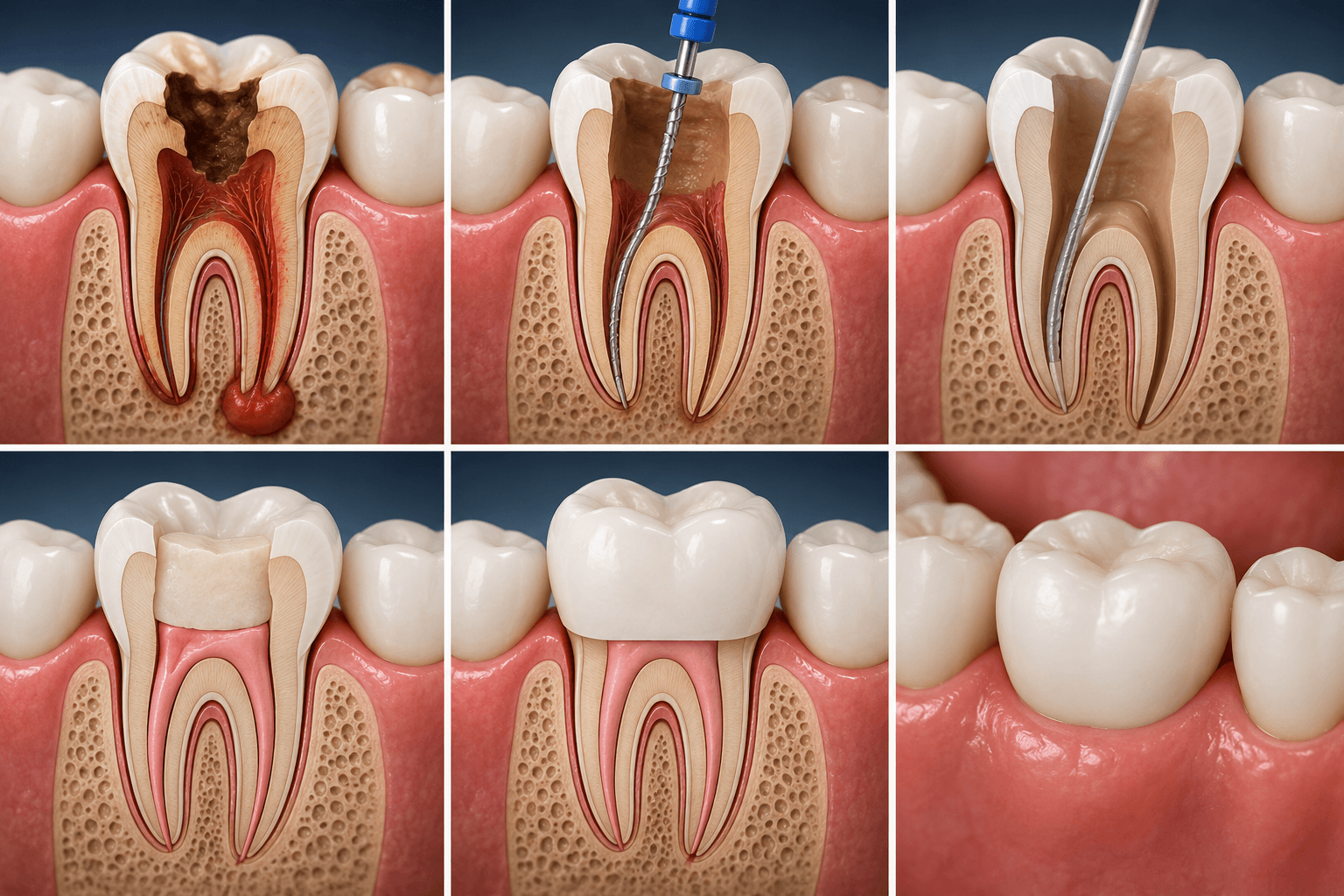
Endodontic treatment—the technical term for root canal therapy—focuses on treating the inside of the tooth. During the procedure, your dentist or endodontic specialist removes the infected or damaged pulp, cleans and shapes the root canal system, then seals it to prevent future infection.
The cleaned canals are filled with a biocompatible material called gutta-percha. This rubber-like substance, combined with adhesive cement, creates a tight seal. The filling for root canal treatment essentially replaces the removed pulp, maintaining the tooth’s structural integrity.
Root Canal Pictures: What the Procedure Actually Looks Like
If you’ve ever searched for root canal pictures online, you’ve probably seen some intimidating images. In reality, the procedure looks much less dramatic than those clinical photographs suggest. Your tooth is isolated with a small rubber sheet, and your dentist works with precision instruments that are surprisingly small.
Modern imaging technology means your dentist can see exactly what’s happening inside your tooth. X-rays and sometimes 3D scans guide the treatment, making sure every canal is properly cleaned and sealed.
Signs You Might Have an Infected Tooth
Common Symptoms of Root Canal Infection
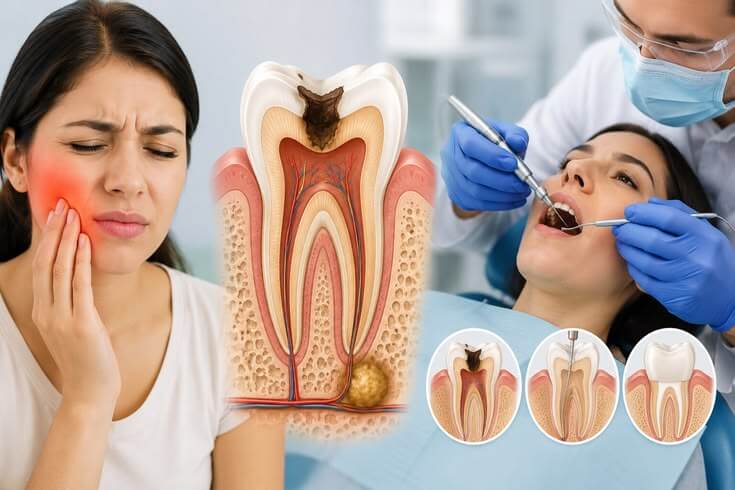
How do you know if you’re dealing with a root canal-infected tooth? There are several telltale signs to watch for. Persistent pain is the most common symptom—this might be a constant ache or sharp pain when biting down. Prolonged sensitivity to hot or cold temperatures is another red flag.
What Happens If an Infected Root Canal Goes Untreated?
Ignoring an infected root canal is never a good idea. The infection won’t simply disappear on its own. Left untreated, the bacteria can spread to surrounding tissues, potentially causing serious health complications.
An untreated infection can lead to bone loss around the root tip, spreading infection to other teeth, or even systemic illness if bacteria enter your bloodstream. The pain will likely intensify over time, and eventually, extraction becomes the only option. That’s why early intervention is so important.
Does a Root Filling Hurt? Addressing Your Biggest Concern
Pain Management During the Procedure
Here’s the truth that might surprise you: Does a root filling hurt? Not really. Modern anaesthesia techniques mean you shouldn’t feel pain during the procedure itself. Your dentist will thoroughly numb the area before beginning, and most patients report feeling pressure but no actual pain.
If you’re particularly anxious, discuss sedation options with your dentist. Many practices offer various levels of sedation to help nervous patients relax.
Root Treatment Pain: What to Realistically Expect
Let’s be honest about root treatment pain—there will be some discomfort. However, it’s typically mild and manageable. Most patients describe it as similar to having a standard filling, perhaps with some additional tenderness for a few days afterwards.
Over-the-counter pain relievers usually provide adequate relief. Your dentist might also prescribe antibiotics if an infection is present. The key takeaway? The discomfort from treatment is far less than the pain of leaving an infected tooth untreated.
Root Canal Discomfort vs. the Pain of an Infected Tooth
When weighing up root canal discomfort against the agony of an infected tooth, there’s really no comparison. An infected tooth can cause excruciating, relentless pain that disrupts sleep, eating, and daily life. Root canal treatment actually provides relief from this pain.
Think of it this way: the procedure is the cure, not the cause. Within days of treatment, most patients feel significantly better than they did before.
The Root Canal Treatment Process: Step by Step
Initial Assessment with Your Root Canal Dentist
Your journey begins with a thorough assessment. Your root canal dentist will examine the affected tooth, take X-rays, and discuss your symptoms. This initial consultation helps determine whether root canal treatment is the right approach.
During this appointment, ask questions. A good dentist will explain the procedure, discuss alternatives, and make sure you understand what to expect.
The Treatment Procedure Explained
The actual root canal treatment typically takes one to two appointments, depending on the complexity. First, your dentist administers local anaesthesia. Once you’re numb, they create a small opening in the tooth’s crown to access the pulp chamber.
Using specialised instruments, they remove the infected pulp and clean the canal system thoroughly. This step is crucial—any remaining bacteria could cause reinfection. The canals are then shaped to receive the filling material.
Filling for Root Canal: Sealing and Protecting the Tooth
Once the canals are clean and shaped, it’s time for the filling for root canal treatment. Gutta-percha is carefully placed into each canal, along with sealer cement. This combination creates a barrier against future bacterial invasion.
A temporary filling typically covers the opening until your follow-up appointment. At that stage, you’ll discuss whether you need additional restoration, like a crown.
Root Canal and Crown: Do You Always Need One?
When a Crown Is Recommended
The question of root canal and crown often comes up after treatment. In many cases, a crown is recommended—particularly for back teeth that endure significant chewing forces. A crown provides extra protection and strength to a tooth that’s been weakened by infection and treatment.
Front teeth sometimes don’t require crowns, especially if enough natural tooth structure remains. Your dentist will assess your specific situation and recommend the best approach.
Alternatives to Crowns After Treatment
If a full crown isn’t necessary, alternatives exist. A large filling or onlay might provide sufficient protection for some teeth. The decision depends on factors like tooth location, remaining tooth structure, and your bite pattern.
Root Canal Recovery: What to Expect Afterwards
Managing Post-Treatment Discomfort
Some tenderness is normal during recovery for a root canal. Over-the-counter pain relievers like ibuprofen or paracetamol usually provide adequate relief. Applying a cold compress to your cheek can also help reduce any swelling.
When to Contact Your Dentist During Recovery
While mild discomfort is expected, certain symptoms warrant a call to your dentist. Contact them if you experience severe pain, visible swelling, an allergic reaction to medication, or if your temporary filling falls out.
Can a Root-Canaled Tooth Become Infected Again?
Why Reinfection Happens
Unfortunately, a root-canaled tooth infected again is possible, though uncommon. Reinfection can occur if bacteria weren’t completely eliminated during initial treatment, if the seal breaks down over time, or if new decay develops.
Signs of an Infected Root Canal After Treatment
Watch for returning symptoms like pain, swelling, or sensitivity. A new abscess or persistent discomfort months after treatment could indicate reinfection.
Treatment Options for Reinfection
If reinfection occurs, options include retreatment (redoing the root canal), apicoectomy (surgical removal of the root tip), or extraction as a last resort.
Choosing the Right Dentistry for Root Canal Treatment
General Dentist vs. Endodontic Specialist
When seeking dentists for root canal treatment, you have options. General dentists perform many root canals successfully. However, complex cases might benefit from an endodontic specialist—a dentist with additional training in root canal procedures.
What to Look for in a Root Canal Dentist
Choose a root canal dentist who communicates clearly, uses modern technology, and makes you feel comfortable. Don’t hesitate to ask about their experience and success rates.
Preserving Your Natural Smile Through Root Canal Treatment
Root canal treatment truly is a tooth-saving procedure. Rather than facing extraction, you can keep your natural tooth functioning for years—even a lifetime—with proper care. The benefits extend beyond aesthetics; maintaining your natural teeth supports proper chewing, prevents neighbouring teeth from shifting, and preserves your jawbone.
If you’re experiencing symptoms of a tooth infection, don’t delay seeking treatment. Early intervention typically means simpler treatment and better outcomes. Modern dentistry has made root canal treatment more comfortable and successful than ever before.
Remember, your natural teeth are worth saving. Root canal treatment offers a proven, effective way to eliminate infection while preserving what nature gave you. So next time someone mentions “root canal,” you’ll know it’s not something to fear—it’s something to appreciate.