

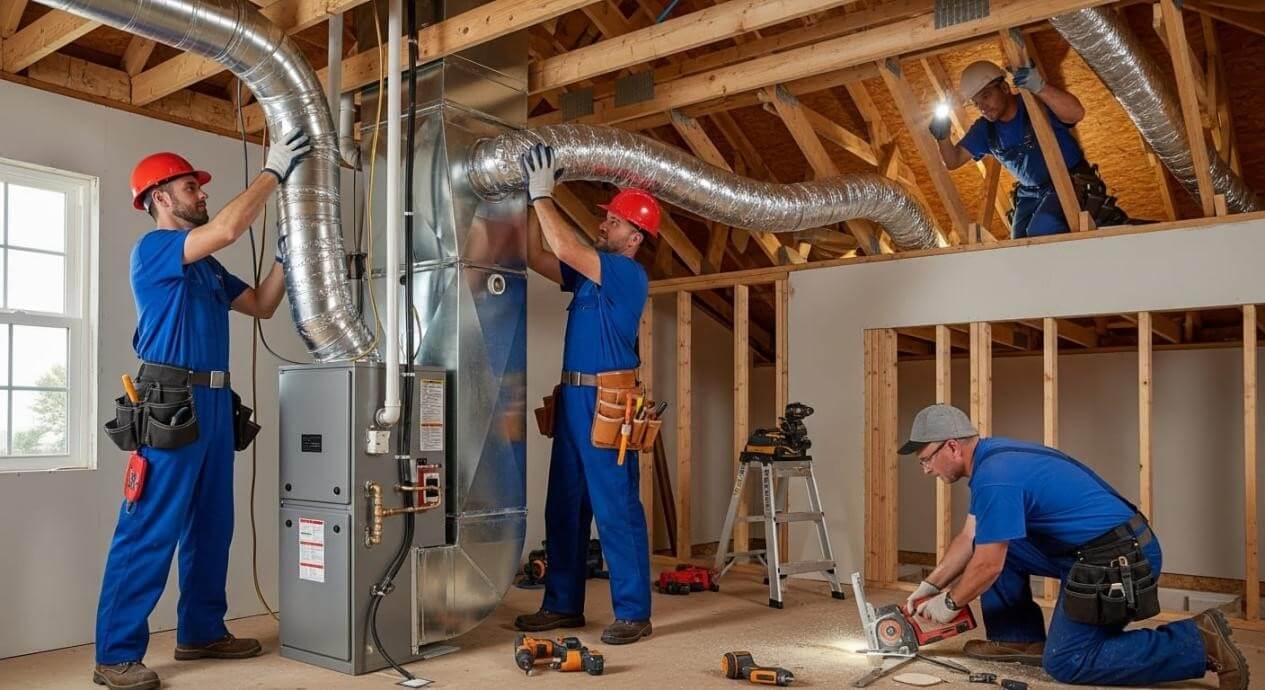
What Is a Duct Heating System?
A duct heating system is a network of insulated pipes that carry warm air from a central unit to every room in a house. In Australia, the most common type is the electric ducted system, which uses a heat pump or electric heater to warm the air before it travels through the ducts. Because the same ductwork can also deliver cool air, many homeowners treat it as a combined heating and cooling solution.
How Duct Heating Works in Australian Homes
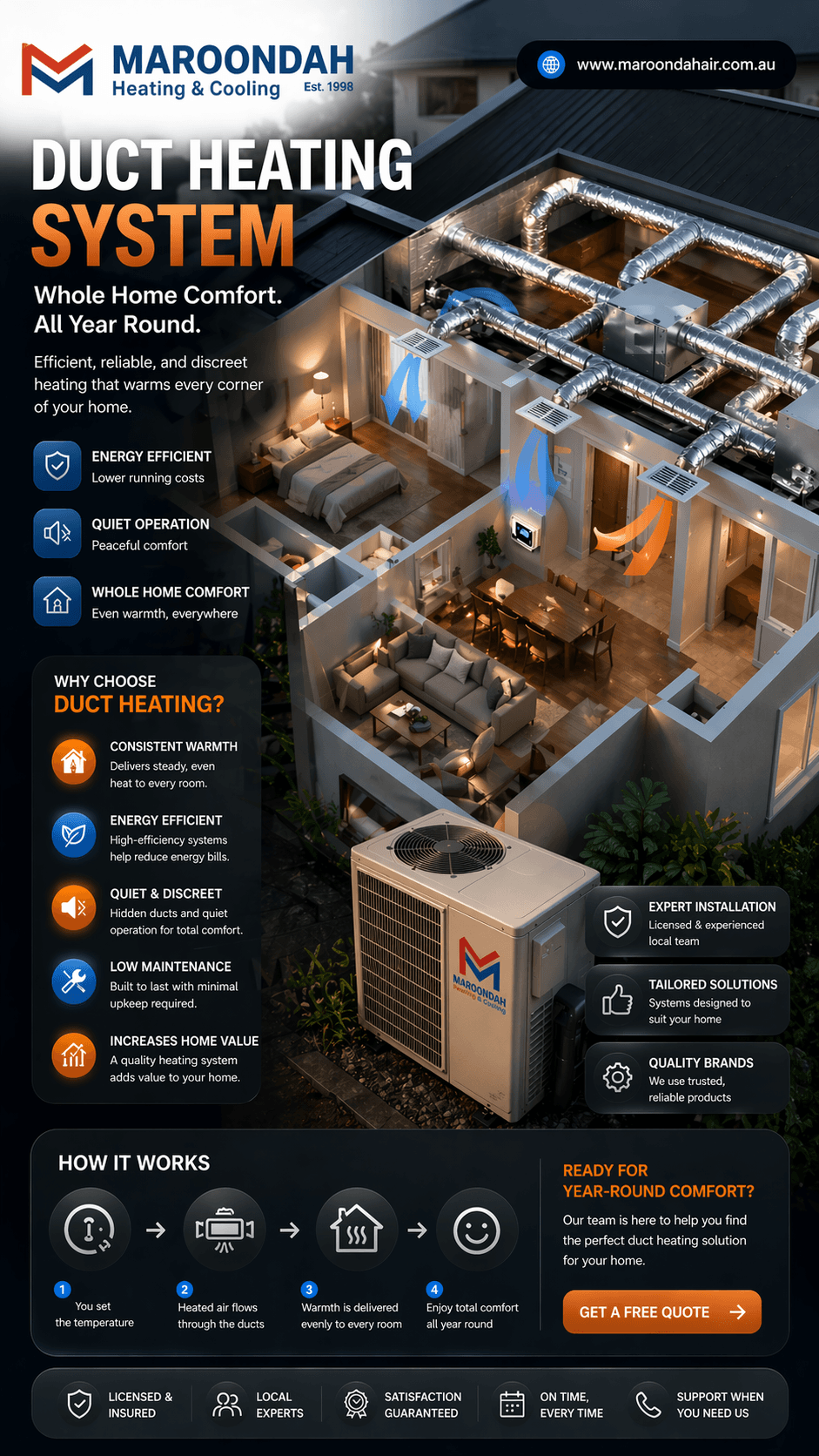
The process starts with a thermostat that tells the unit when to turn on. The electric heating element or heat pump then heats the air, which is blown by a high‑speed fan into the duct network. The ducts run behind walls, under floors, or in ceiling cavities, delivering a steady stream of warm air to each room. Because the system is sealed, it can maintain a consistent temperature without the drafts that come from window‑mounted units.
Key Components
- Heat source: electric heater or reverse‑cycle heat pump.
- Fan and blower: moves air through the ducts.
- Ductwork: insulated pipes that distribute air.
- Thermostat: controls temperature and zoning.
- Return air grille: pulls cooler air back to the unit.
Benefits of a Duct Heating System in Australia
Choosing a duct heating system brings several advantages that suit the Australian climate and lifestyle.
- Even temperature distribution across rooms.
- Quiet operation – the noisy fan stays in the ceiling or attic.
- Space‑saving – no bulky wall units.
- Energy efficiency when paired with a reverse‑cycle heat pump.
- Improved indoor air quality when filters are maintained.
Choosing the Right System for Your Climate
Australia’s climate ranges from tropical north to temperate south, so the right duct heating system depends on where you live.
Hot‑Summer Regions (e.g., Queensland, Northern NSW)
A reverse‑cycle heat pump is ideal because it provides both cooling in summer and heating in winter. Look for a unit with a high Seasonal Energy Efficiency Ratio (SEER) and a good Coefficient of Performance (COP) for the cooler months.
Cool‑Winter Regions (e.g., Victoria, Tasmania)
An electric ducted heater can be a cost‑effective backup when temperatures dip below 5 °C. Pair it with a programmable thermostat to avoid unnecessary heating.
Installation Considerations and Local Regulations
Installing a duct heating system in Australia must follow the Australian Standard AS/NZS 3666 for ventilation and AS/NZS 3500 for plumbing and gas (if a gas backup is used). A licensed installer should:
- Assess the existing ductwork for insulation and leaks.
- Ensure the electrical wiring meets AS/NZS 3000 (the Wiring Rules).
- Obtain any required council approvals, especially for new builds or major renovations.
- Provide a compliance certificate after installation.
Maintenance Tips for Longevity
Regular upkeep keeps a duct heating system running efficiently and reduces the risk of breakdowns.
- Check and replace air filters every 3‑6 months.
- Inspect ducts for dust buildup and clean them annually.
- Schedule a professional service before the heating season.
- Test the thermostat and zoning controls for accuracy.
- Look for signs of condensation around the heat pump.
Cost and Energy Efficiency
The upfront cost of a duct heating system varies by size, brand, and installation complexity. In Australia, a typical residential electric ducted system can range from $5,000 to $12,000 including installation. Energy bills can be lowered by:
- Choosing a high‑efficiency heat pump.
- Using a programmable or smart thermostat.
- Sealing any duct leaks.
- Keeping the system clean and well‑maintained.
Finding Trusted Installers in Australia
When looking for a professional to install your duct heating system, consider local providers who are members of the Master Builders Association or the Air Conditioning and Mechanical Contractors Association (ACMCA). They will be familiar with state regulations and can offer warranties that meet Australian consumer law.
Questions and Answers: Common Questions About duct heating system in Australia
Q1: How much does it cost to install a duct heating system in a typical Australian home?
A: Installation costs depend on the size of the house, the type of heat pump, and any existing ductwork. For a three‑bedroom house, most owners pay between $5,000 and $9,000, including labour and a basic warranty.
Q2: Do I need a separate cooling system if I install an electric duct heating system?
A: No. Most electric ducted units are reverse‑cycle, meaning they can both heat and cool. The same ductwork and thermostat control both functions, which saves space and reduces installation costs.
Q3: What Australian regulations apply to duct heating system installations?
A: The key standards are AS/NZS 3666 for ventilation, AS/NZS 3000 for electrical safety, and any local council building codes. A licensed installer must provide a compliance certificate after the job is done.
Q4: How often should I service my duct heating system?
A: It’s best to have a professional service once a year, ideally before the heating season starts. Homeowners should also replace filters every 3‑6 months and check for visible duct leaks.
Q5: Can a duct heating system improve indoor air quality?
A: Yes, when the system includes high‑efficiency filters and the ducts are kept clean, it can reduce dust, pollen, and other allergens. Some units also offer optional UV or ionisation filters for extra protection.
Conclusion: Your Path to a Successful duct heating system in Australia
A duct heating system offers an efficient, quiet, and space‑saving way to keep Australian homes comfortable year‑round. By understanding how the system works, matching it to your local climate, and following the relevant standards, you can enjoy consistent temperatures and lower energy bills. Choose a reputable, licensed installer, keep the system clean, and schedule regular maintenance to protect your investment. With these steps, your home will be ready for both the summer heat and the winter chill, delivering comfort for you and your family.