
Removing a tree is often seen as the hardest part of garden maintenance, but anyone who has chopped down a gum tree in their Aussie backyard knows the job is far from over once the trunk hits the ground. You are left with a stump. This stubborn remnant can sit there for years, taking up space and causing headaches. While it might be tempting to leave it be, ignoring it can lead to issues ranging from pest infestations to tripping hazards.
This guide explores everything you need to know about stump removal. We will look at why it matters, the methods available to you, and the specific considerations for Australian properties. Whether you are dealing with a massive Eucalyptus root system or a small fruit tree stump, understanding the process ensures you make the right choice for your garden.
Why You Should Not Ignore That Old Stump
Many homeowners cut down a tree and decide to worry about the stump later. Life gets busy, and “later” turns into years. However, leaving a stump in the ground can cause problems that are harder to fix down the track.
The Termite Risk
In Australia, the biggest concern with dead wood in the ground is termites. White ants love decaying timber. A rotting stump acts as a welcome sign for a termite colony. Once they establish a nest in the stump, they look for other food sources. If your house is nearby, the leap from the garden to your timber frame is a short one. Proper stump removal eliminates this food source and helps protect your home.
Safety and Aesthetics
Beyond pests, stumps are a safety risk. They are easy to trip over, especially when grass grows tall and hides them. If you have children running around or elderly relatives visiting, a hidden stump is an accident waiting to happen. Additionally, navigating a lawnmower around a protruding root ball is frustrating and can damage your equipment.
From a visual standpoint, a rotting stump rarely looks good. It disrupts the flow of your landscape and prevents you from planting new flora or laying turf. Getting rid of it opens up your yard, giving you a clean slate for your next landscaping project.
Understanding Your Options for Stump Removal
When it comes to getting that wood out of the ground, you generally have two main paths: grinding or full excavation. Each has its place depending on your future plans for the area.
Stump Grinding
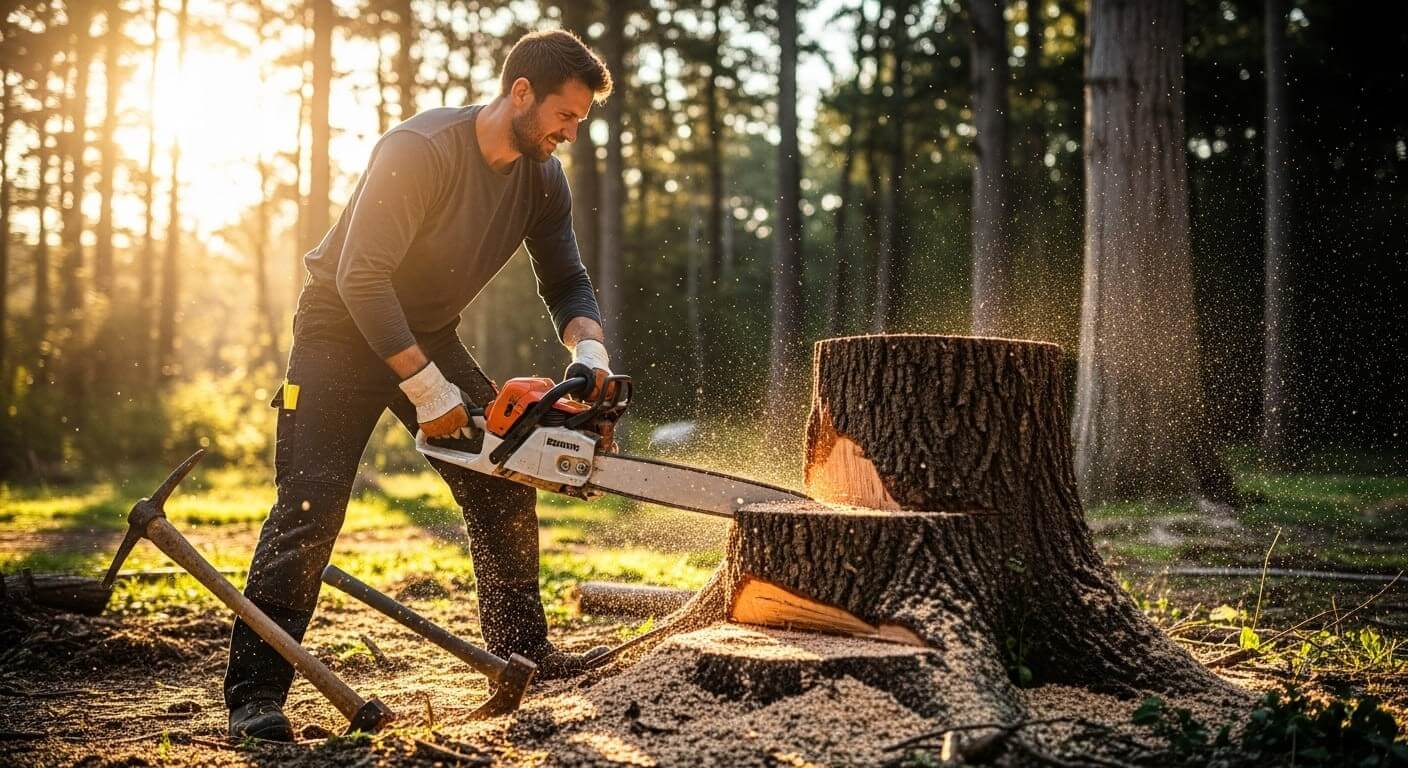
This is the most popular method for residential properties. A machine with a spinning cutter wheel chips away at the wood, turning the stump into mulch.
- How it works: The grinder chews the stump down to below ground level.
- The result: You are left with a hole filled with wood chips and soil.
- Best for: Homeowners who want the stump gone quickly without destroying the surrounding garden. It is efficient and usually more affordable than excavation.
Grinding is excellent because it disrupts the root ball enough to kill the tree system without needing to rip up the entire yard. The remaining roots underground will die off naturally over time.
Full Excavation
Excavation involves digging out the entire stump and the major root system. This is a much bigger job.
- How it works: Heavy machinery, like an excavator, digs around the base and pulls the root ball out.
- The result: A large hole that needs filling and a completely clear patch of earth.
- Best for: Construction sites. If you plan to build a shed, extend your home, or pour a concrete slab right where the tree was, you need full removal to ensure the ground is stable.
Chemical Removal
Some people try chemical removal methods. This involves drilling holes in the stump and filling them with a stump killer solution to accelerate decay. While less labour-intensive, this process is very slow. It can take many months or even years for the stump to rot enough to be broken apart. For most Australians wanting their yard back, this is too slow.
The Australian Context: Native Trees and Soil
Stump removal in Australia presents unique challenges compared to other parts of the world. Our native vegetation is tough.
Hardwood Challenges
Australian hardwoods, such as Ironbark or various Gum species, are incredibly dense. A small grinder that works on a soft pine tree might struggle against a seasoned Eucalypt stump. The machinery requires sharp teeth and significant horsepower to get through the wood effectively.
Root Systems
Native trees often have extensive root systems to survive droughts. These roots can spread far wider than the canopy of the tree. When performing stump removal, it is vital to check where these surface roots go. They might be wrapped around water pipes or extending under driveways. A professional assessment helps identify which roots can be ground down and which ones need careful handling to avoid damaging infrastructure.
DIY vs. Professional Assistance
You might wonder if you should rent a machine and do it yourself. It is a valid thought, but there are important factors to weigh up.
The DIY Approach
You can hire stump grinders from local equipment hire sheds. These machines are generally smaller than commercial units.
- Pros: You work on your own schedule.
- Cons: The machines are heavy and dangerous. Without proper training, the machine can “kick back.” You also need safety gear, including heavy boots, eye protection, and ear defence.
Hiring a Professional
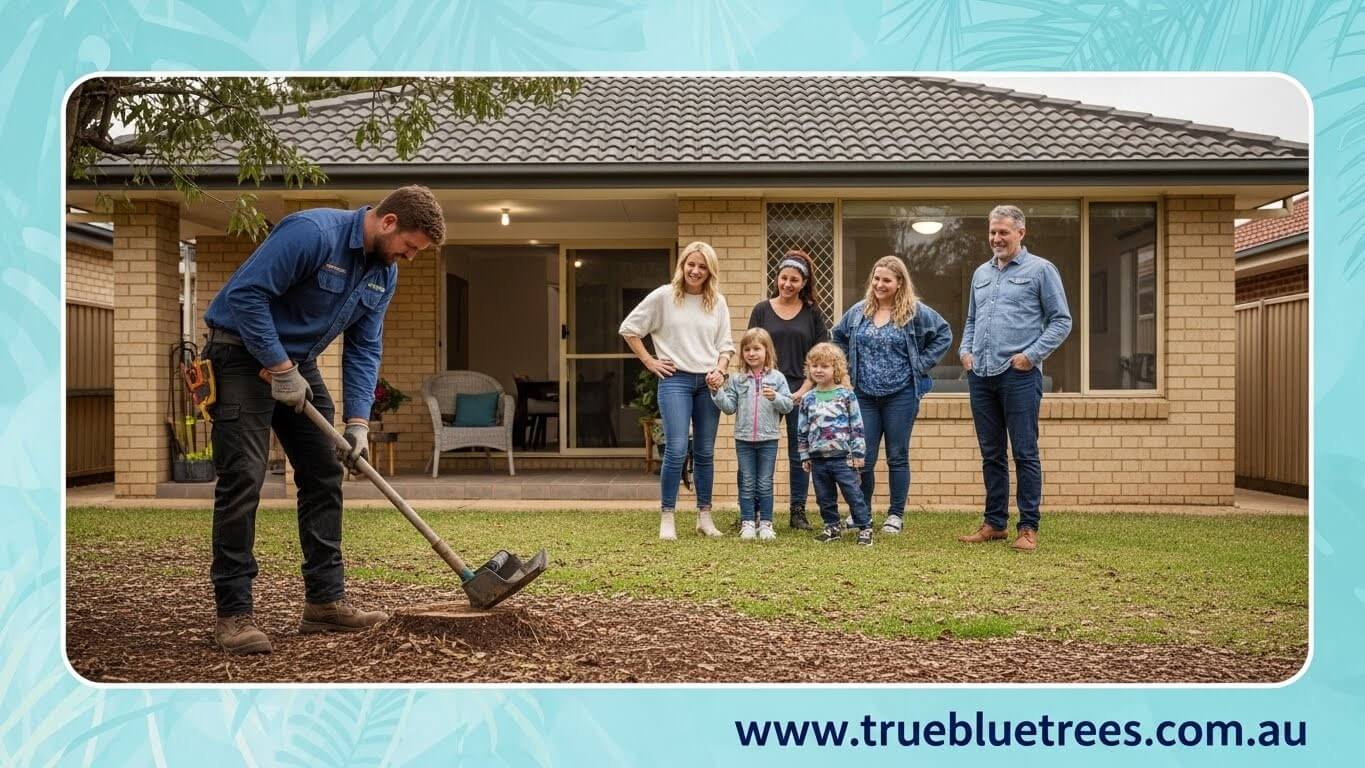
Engaging a service like True Blue Trees ensures the job is done safely. Professionals bring commercial-grade machines that make short work of even large stumps.
- Access: Professionals have machines of different sizes. Some are narrow enough to fit through a standard side gate, while others are massive units for open spaces.
- Cleanup: Grinding creates a surprisingly large volume of wood chips. A service will often offer to remove this mulch or spread it for you, saving you the clean-up time.
- Underground Services: A major risk in stump removal is hitting gas, water, or internet cables. Experienced operators know how to check for these hazards or use the “Before You Dig” service to locate pipes before they start grinding.
Regulations and Council Rules
Before you start digging or grinding, you must consider local laws. In Australia, tree preservation is taken seriously. While you usually have permission to remove a stump if the tree has already been legally cut down, it is always worth double-checking.
Some councils have “Significant Tree” registers. Even if the trunk is gone, digging up the root zone of a protected tree area might require a permit, especially if it impacts neighbouring trees or heritage landscapes. Furthermore, if you are on a strata property, you will need body corporate approval before bringing in heavy machinery.
What to Expect on the Day
If you book a stump removal service, the process is straightforward.
- Site Access: The operator will check the width of your gates to ensure the machine fits.
- Preparation: They will clear rocks and debris from around the base of the stump to prevent damage to the grinder teeth.
- Grinding: The machine moves over the stump, sweeping back and forth. It grinds the main stump and usually chases visible surface roots.
- Depth: Standard grinding goes roughly 150mm to 300mm below the surface. This is deep enough to lay turf over the top.
- Filling the Hole: Once the wood is gone, the hole is typically backfilled with the wood chips and soil mixture.
Aftercare: What to Do with the Mulch
After stump removal, you will have a mound of fresh wood mulch. This material is rich in carbon. You can leave it in the hole to settle, but be aware that as it decomposes, the ground level might sink slightly. You may need to top it up with garden soil after a few months.
Alternatively, you can spread the excess mulch on garden beds. It helps retain moisture and suppresses weeds. However, fresh wood chips can draw nitrogen from the soil initially, so adding some fertiliser or manure helps keep your plants happy.
Questions and Answers: Common Questions About Stump Removal in Australia
Is stump removal necessary after cutting down a tree?
While not strictly mandatory, it is highly recommended. Leaving a stump attracts termites and other pests like carpenter ants. In the Australian climate, these pests thrive in rotting wood. Removing the stump protects your home and improves the usability of your garden.
Can I build over the area where a stump was removed?
This depends on the removal method. If the stump was ground out, the old roots are still deep underground. As they rot, the ground can subside. For heavy structures like a house extension, you need full excavation to remove the root ball completely. For a garden shed or deck, standard grinding is usually sufficient, provided you use appropriate footings.
Does stump grinding kill the roots?
Yes, in most cases. Grinding the stump down below ground level separates the root system from the trunk. Without the ability to photosynthesize or send up shoots, the remaining roots will die and decompose over time. Some resilient species, like willows or oleanders, may try to sucker, so applying a stump killer to the fresh cut during the process can ensure they do not return.
How deep do you grind the stump?
The standard depth is usually between 200mm and 300mm below the soil line. This depth allows you to cover the area with topsoil and lay turf or plant small shrubs without hitting the remains of the stump. If you plan to replant a large tree in the exact same spot, you might need deeper grinding or full excavation.
Will the machine ruin my lawn?
Professional operators use ground protection mats if the ground is soft or wet to minimize impact. However, the machine is heavy, so some minor impressions on the grass are possible. The actual grinding area will be messy during the work due to flying wood chips, but a good operator will install screens to contain the debris and clean up afterward.
Conclusion: Your Path to a Successful Stump Removal in Australia
Dealing with a leftover stump is the final step in reclaiming your garden. It is about more than just tidying up; it is about safety, pest prevention, and preparing your land for new life. Whether you are worried about termites invading your home or simply want a flat surface for the kids to play cricket, professional stump removal is the most effective solution.
By understanding the difference between grinding and excavation, and recognizing the toughness of Australian timber, you can choose the right approach for your property. Don’t let that old stump dictate how you use your outdoor space. With the right help, you can erase the evidence of that old tree and move forward with your landscaping plans. Reach out to a local expert to assess your specific situation and get that stump sorted once and for all.